סריקה בתהליך...
הניתוח עשוי לארוך 30–90 שניות
הידעת?
הסרטון אינו מכיל תוכן רפואי
חושבים שחלה טעות?
אם לדעתכם הסרטון אכן עוסק בטענות רפואיות או בריאותיות, הוסיפו הסבר קצר ושלחו בקשה לבדיקה מחדש.
הבקשה התקבלה! נבדוק את הסרטון ונחזור אליכם.
אירעה שגיאה בשליחת הבקשה. נסו שוב.
דו״ח מאומת
הסרטון מציג מידע מדויק ומגובה במחקרים מדעיים אמינים.
סיכום
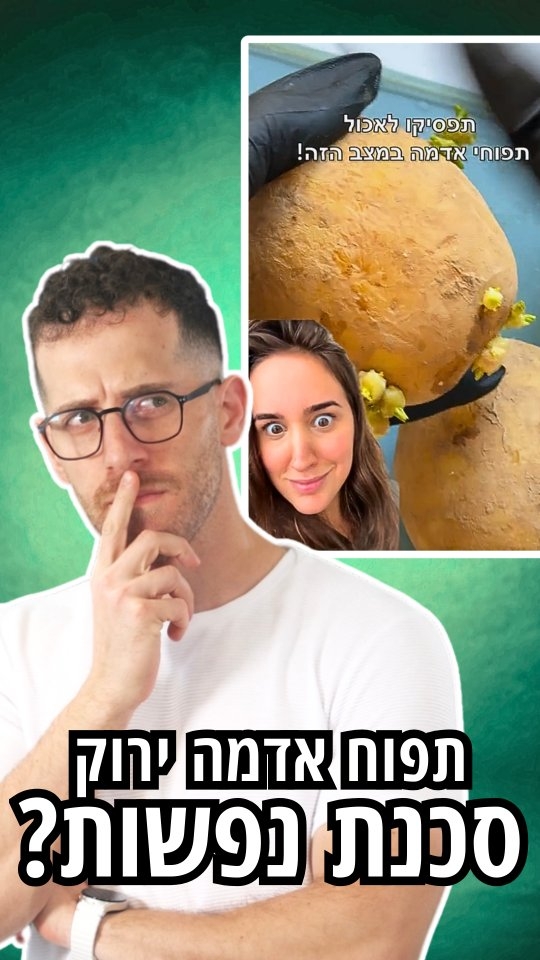
הקליפ הציג טענות לגבי הסיכונים הבריאותיים בצריכת תפוחי אדמה ירוקים ומונבטים. המומחה אישר את הטענות המדעיות המרכזיות בנוגע למנגנון הרעילות, הקשר לחשיפה לאור ותפקידם של הגליקואלקלואידים כמנגנון הגנה של הצמח. על בסיס הראיות המדעיות, המומחה צודק ברוב דבריו, אם כי יש לסייג את הטענה לגבי בישול, שכן גליקואלקלואידים עמידים יחסית בחום ובישול אינו מבטיח את נטרולם המלא.
דוח על סרטון תגובה
סרטון זה מציג קליפ של אדם המביע טענות רפואיות, ומומחה/מגיב שמתייחס אליהן. הציון מבוסס רק על טענות המומחה.
quiz טענות הקליפ ותגובת המומחה
"תפוחי אדמה ירוקים או עם נבטים הם רעילים ומזיקים לגוף."
"תפוחי אדמה ירוקים עם נבטים עלולים לגרום להרעלה."
המומחה מאשר את הטענה שהם עלולים לגרום להרעלה, אך מסביר את המנגנון המדעי מאחורי התופעה.
מסקנת הבדיקה:
הספרות המדעית מאשרת כי תפוחי אדמה ירוקים או מונבטים מכילים ריכוזים גבוהים של גליקואלקלואידים (כגון סולנין), אשר עלולים לגרום להרעלה בבני אדם, המתבטאת בתסמינים במערכת העיכול ובמערכת העצבים. (🟩)
chevron_right מקורות מדעיים: (2)
-
link
A challenging case of suspected solanine toxicity in an eleven-year-old Saudi boy.
Potatoes are commonly consumed food item that contributes key nutrients to the diet including vitamin C, potassium, and dietary fiber. Despite their nutritional value, potato tuber may harm human health by virtue of their toxic glycoalkaloids (solanine). Acute solanine poisoning can happen from ingesting green or sprouted potatoes. The toxicity of Gas in humans causes mainly gastrointestinal disturbances such as vomiting, diarrhea, and abdominal pain. However, at higher doses, the toxicity of Gas in humans produces more severe symptoms, including fever, rapid pulse, low blood pressure, rapid respiration, and neurological disorders. Though potatoes are widely consumed, their toxicity is relatively rare. We came across a suspected case of poisoning by raw potato ingestion in an 11 years old Saudi boy who suffered cardiovascular complications, and was managed conservatively in pediatric ICU. The diagnosis was made based on history and clinical presentation. The patient recovered completely and was discharged with counseling.…
PMID: 36387661
-
link
Recent advances in steroidal glycoalkaloid biosynthesis in the genus <i>Solanum</i>.
Steroidal glycoalkaloids (SGAs) are specialized metabolites found in members of <i>Solanum</i> species, and are also known as toxic substances in <i>Solanum</i> food crops such as tomato (<i>Solanum lycopersicum</i>), potato (<i>Solanum tuberosum</i>), and eggplant (<i>Solanum melongena</i>). SGA biosynthesis can be divided into two main parts: formation of steroidal aglycones, which are derived from cholesterol, and glycosylation at the C-3 hydroxy group. This review focuses on recent studies that shed light on the complete process of the aglycone formation in SGA biosynthesis and structural diversification of SGAs by duplicated dioxygenases, as well as the development of non-toxic potatoes through genome editing using these findings.…
PMID: 38293253
person_check טענות נוספות של המומחה
טענות שהמומחה הביע שאינן קשורות ישירות לטענה ספציפית בקליפ
"בישול, אפייה, צלייה או חימום במיקרוגל מפחיתים משמעותית את רמות הסולנין בתפוח האדמה."
מסקנת הבדיקה:
בעוד שבישול עשוי להפחית חלק מהרעלנים, גליקואלקלואידים הם תרכובות יציבות יחסית בחום. הספרות המדעית מצביעה על כך ששיטות בישול ביתיות אינן מפרקות את הסולנין באופן מלא או משמעותי מספיק כדי להפוך תפוח אדמה רעיל לבטוח למאכל. (🟨)
"הצבע הירוק נגרם מחשיפה לאור המעודדת ייצור כלורופיל."
מסקנת הבדיקה:
חשיפה לאור מעודדת את תהליך הפוטוסינתזה בתפוח האדמה, מה שמוביל לייצור כלורופיל המקנה לו את הצבע הירוק. תהליך זה קשור קשר הדוק לסינתזה של גליקואלקלואידים. (🟩)
chevron_right מקורות מדעיים: (2)
-
link
Tracer studies on the incorporation of [2-14C]-DL-mevalonate into chlorophylls a and b, alpha-chaconine, and alpha-solanine of potato sprouts.
Chlorophyll and glycoalkaloids are synthesized in different parts of the potato plant including leaves, tubers, and sprouts. Although light stimulates the biosynthesis of both constituents, the question of whether the two biosynthetic pathways are under the same genetic control has not been resolved. This study investigated the dynamics of incorporation of labeled [2-(14)C]-DL-mavalonate into chlorophyll a, chlorophyll b, and the glycoalkaloids alpha-chaconine and alpha-solanine in potato sprouts after 7 and 14 days of storage in the light and in the dark. No chlorophyll synthesis occurred in the dark. Fractionation of the "glycoalkaloid" extract followed by high-performance liquid chromatography produced four peaks. The fractions were collected and analyzed for radioactivity. About 80% of the radioactivity resided in fraction 1, the composition of which is unknown. Two of the fractions, with 1-14% of the original label, were alpha-chaconine and alpha-solanine. The radioactivity derived from mevalonate largely resides in unidentified compound(s) eluting as a single peak on the HPLC column before the peaks associated with the glycoalkaloids. The specific radioactivity of alpha-chaconine and alpha-solanine increased approximately 2-fold in going from 7 to 14 days of exposure in the light and in the dark. These and additional observations point to the near identity of the dynamics of biosynthesis of the two glycoalkaloids. These data also implicate a non-mevalonate pathway for the synthesis of both chlorophylls and the glycoalkaloids and are consistent with independent genetic control of the concurrent formation of the two classes of compounds during greening of potatoes.…
PMID: 11170564
-
link
Light-Quality-Dependent Greening and Steroidal Glycoalkaloid Accumulation in Potato Tubers: Regulatory Mechanisms and Postharvest Strategies to Reduce Food Safety Risks.
Potato tubers undergo greening and accumulate steroidal glycoalkaloids (SGAs) upon light exposure, posing potential food safety risks. In this study, six potato cultivars ("Favorita", "Lucinda", "Jizhangshu 12", "Longshu 10", "Qingshu 9", and "Purple Potato") were subjected to six light treatments (dark, UVA, blue, green, red, and white), and peel color, pigment content, SGAs, and the expression of genes related to light signaling, chlorophyll biosynthesis, and SGA biosynthesis was evaluated. Under green light, the contents of α-solanine and α-chaconine were 76.22 and 171.84 mg/kg fresh weight (FW), respectively; by contrast, their levels under blue and white light were approximately 60% higher. These effects may be mediated by the upregulation of HY5 and COP1 expression, which in turn could regulate the biosynthesis of chlorophyll-related genes (<i>CHID</i>, <i>CHLI1</i>) and SGA-related genes (<i>HMGR</i>, <i>SGT1</i>). Yellow-skinned cultivars exhibited pronounced light sensitivity (chlorophyll 18.47-18.52 mg/kg FW; SGAs up to 290.41 mg/kg FW), whereas red- and purple-skinned cultivars delayed greening through anthocyanin-mediated light attenuation. Collectively, these findings provide a framework for postharvest management and breeding, suggesting that reducing blue light while enhancing green light in spectral illumination, together with the development of anthocyanin-enriched cultivars, may serve as effective strategies to extend shelf life, mitigate food safety risks, and reduce postharvest losses.…
PMID: 41097562
"חשיפה לאור מעודדת ייצור גליקואלקלואידים, כגון סולנין, המשמשים כמנגנון הגנה לצמח."
מסקנת הבדיקה:
גליקואלקלואידים משמשים כמטבוליטים משניים המהווים חלק ממערכת ההגנה הטבעית של הצמח מפני מזיקים ופתוגנים, וייצורם מוגבר בתגובה לחשיפה לאור ולמתחים סביבתיים. (🟩)
chevron_right מקורות מדעיים: (3)
-
link
Glycoalkaloid and calystegine levels in table potato cultivars subjected to wounding, light, and heat treatments.
Potato tubers naturally contain a number of defense substances, some of which are of major concern for food safety. Among these substances are the glycoalkaloids and calystegines. We have here analyzed levels of glycoalkaloids (α-chaconine and α-solanine) and calystegines (A₃, B₂, and B₄) in potato tubers subjected to mechanical wounding, light exposure, or elevated temperature: stress treatments that are known or anticipated to induce glycoalkaloid levels. Basal glycoalkaloid levels in tubers varied between potato cultivars. Wounding and light exposure, but not heat, increased tuber glycoalkaloid levels, and the relative response differed among the cultivars. Also, calystegine levels varied between cultivars, with calystegine B4 showing the most marked variation. However, the total calystegine level was not affected by wounding or light exposure. The results demonstrate a strong variation among potato cultivars with regard to postharvest glycoalkaloid increases, and they suggest that the biosynthesis of glycoalkaloids and calystegines occurs independently of each other.…
PMID: 23692427
-
link
Potato steroidal glycoalkaloids: properties, biosynthesis, regulation and genetic manipulation.
Steroidal glycoalkaloids (SGAs), predominantly comprising α-solanine (C<sub>45</sub>H<sub>73</sub>NO<sub>15</sub>) and α-chaconine (C<sub>45</sub>H<sub>73</sub>NO<sub>14</sub>), function as natural phytotoxins within potatoes. In addition to their other roles, these SGAs are crucial for enabling potato plants to withstand biotic stresses. However, they also exhibit toxicity towards humans and animals. Consequently, the content and distribution of SGAs are crucial traits for the genetic improvement of potatoes. This review focuses on advancing research related to the biochemical properties, biosynthesis, regulatory mechanisms, and genetic improvement of potato SGAs. Furthermore, we provide perspectives on future research directions to further enhance our understanding of SGA biosynthesis and regulation, ultimately facilitating the targeted development of superior potato varieties.…
PMID: 39668379
-
link
In vitro effects of potato glycoalkaloids on plant-pathogens, beneficial microbes, and Arabidopsis thaliana.
Potato glycoalkaloids (PGAs), α-solanine and α-chaconine, are secondary metabolites related to plant defense. Highly concentrated in the upper part of potato plants, they exhibit antimicrobial properties. Seeking more sustainable crop protection strategies, this study investigates the effects of PGAs on plant pathogens and beneficial organisms. These organisms were exposed to different PGA concentrations (0.98 to 250 ppm), with evaluations focusing on developmental and survival metrics. Key findings highlight α-chaconine as the more potent compound, causing significantly stronger adverse effects across tested organisms. E.g., α-chaconine (≤ 25 ppm) reduced nematode mobility by 43%, host attraction by > 45%, and infection rates by 63%. At 250 ppm, α-solanine moderately reduced mycelial growth, while α-chaconine reduced it by 78%. Crucially, beneficial organisms experienced minimal growth impairment (≤ 19%) even at the highest concentration (250 ppm). Arabidopsis thaliana seedling development was impaired by both PGAs, and seedlings exposed to these compounds exhibited a strong, transient oxidative burst, indicating direct stress activation. Pretreatment with PGAs did not induce priming effects but even decreased subsequent elicitor-induced responses. The selective toxicity against pathogens, coupled with minimal impact on beneficial species, positions PGAs, particularly α-chaconine, as promising starting points for sustainable crop protection strategies.…
PMID: 40962870
"מינון של מעל 1 מ"ג גליקואלקלואידים לק"ג משקל גוף נחשב לרעיל לבני אדם."
מסקנת הבדיקה:
הספרות המדעית מציינת את רף ה-1 מ"ג לק"ג משקל גוף כסף סף רעילות מקובל להערכת סיכונים תזונתיים הקשורים לצריכת גליקואלקלואידים מתפוחי אדמה. (🟩)
Jordan Ovadia | ירדן עובדיה
דירוג זה מבוסס על 9 דוחות אימות קודמים.
האם הדוח הזה היה מועיל לך?
מה היה פחות טוב? (רשות)
תודה על הפידבק!
עירעור על דוח זה
ספקו ראיות חדשות או הצביעו על אי דיוקים
נעדכן אותך על תוצאות הבדיקה
הוסיפו קישורים למחקרים או מקורות רפואיים מוכרים
העירעור נשלח בהצלחה!
המנוע המדעי שלנו יבדוק את הראיות שהגשתם. נעדכן אתכם באימייל עם התוצאות.
ניתוח מבוסס בינה מלאכותית
דוח זה נוצר באופן אוטומטי על ידי מערכת בינה מלאכותית ועשוי להכיל שגיאות, אי-דיוקים או מידע חלקי. הניתוח אינו מהווה ייעוץ רפואי, אבחנה או המלצה לטיפול, והוא אינו תחליף לדעתו של איש מקצוע רפואי מוסמך. יש להתייעץ עם רופא או מומחה מוסמך לפני קבלת כל החלטה רפואית. המידע מוצג לצרכי מידע כללי בלבד.
מידע זה מופק על ידי בינה מלאכותית ואינו מהווה תחליף לייעוץ רפואי מקצועי.