סריקה בתהליך...
הניתוח עשוי לארוך 30–90 שניות
הידעת?
הסרטון אינו מכיל תוכן רפואי
חושבים שחלה טעות?
אם לדעתכם הסרטון אכן עוסק בטענות רפואיות או בריאותיות, הוסיפו הסבר קצר ושלחו בקשה לבדיקה מחדש.
הבקשה התקבלה! נבדוק את הסרטון ונחזור אליכם.
אירעה שגיאה בשליחת הבקשה. נסו שוב.
דו״ח מאומת
הסרטון מציג מידע מדויק ומגובה במחקרים מדעיים אמינים.
סיכום
הטענות שנבדקו בנוגע לטיפול בצריבות מדוזות מבוססות היטב על הספרות המדעית וההנחיות הקליניות המעודכנות. הראיות תומכות בכך שיש להימנע משתן, להסיר נמטוציסטים שנותרו על העור, להשתמש במים חמים להקלה על הכאב, ולהתאים את השימוש בחומץ לפי מין המדוזה.
analytics ניתוח טענות מבוסס ראיות
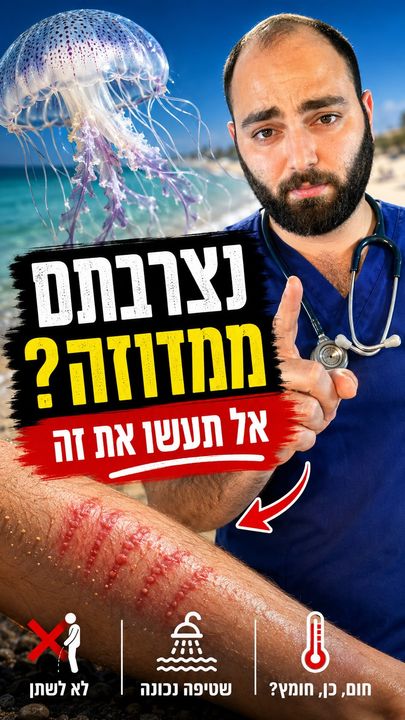
"השתן אינו טיפול מומלץ לצריבת מדוזה ואף עלול לגרום לתאים צורבים נוספים לשחרר ארס."
מסקנת הבדיקה:
הספרות המדעית מאשרת ששטן אינו טיפול מומלץ לצריבות מדוזות, שכן נוזלי גוף ומשבי מים שאינם מותאמים עלולים לעורר תאים צורבים לשחרר ארס נוסף.
chevron_right ודאות הפסיקה: גבוהה
מידת הביטחון של המערכת בפסיקה — לא אחוז הנכונות של הטענה. ביטחון נמוך פירושו שהראיות מעטות או סותרות.
chevron_right מקורות מדעיים: (2)
-
link
Hot-Water Immersion (HWI) or Ice-Pack Treatment (IPT) as First Aid for Human Envenomation by Marine Animals? Review of Literature.
Envenomation by marine animals poses a significant health concern globally, affecting both local residents and tourists in coastal regions. The primary objective of this review is to critically evaluate the existing scientific literature to determine the most effective first-aid treatment for envenomations caused by marine animals, specifically whether hot-water immersion (HWI) or ice-pack treatment (IPT) provides the best immediate care. This comprehensive review covers a wide range of marine envenomations, from jellyfish stings to stingray injuries. While our focus is primarily on the efficacy of HWI and IPT, we also explore the role of cold-water treatment as a result of its relevance and similarity to ice-pack applications. In addition, we examine other treatments mentioned in the literature, such as medications or vinegar, and highlight their findings where applicable. To provide a clear and structured overview, we summarised the articles in separate tables. These tables categorise the type of research conducted, the marine species studied, the region of origin of the marine species, and the key findings of each study. Our analysis of the available evidence indicates a general consensus in the scientific community on the effectiveness of HWI or IPT for envenomation by marine animals. However, when treating those injuries, it is crucial to consider all factors since there is no universally superior treatment due to the diverse nature of marine habitats.…
PubMed · PMID: 38922167
-
link
First Aid Treatment of Jellyfish Stings: A Systematic Review.
Jellyfish stings and envenomation can cause local and systemic symptoms with varying severity and duration. The goals of first aid include interventions to relieve symptoms, thus reducing morbidity and mortality. In this systematic review performed on behalf of the International Liaison Committee on Resuscitation (ILCOR) First Aid Task Force, we aimed to answer the question: Among adults and children with a suspected jellyfish sting, what is the effect of first aid intervention as treatment, compared to other treatment or no treatment, on pain, time to pain relief, survival, need for hospitalization, and adverse outcomes or complications? A search for randomized controlled trials (RCTs) and non-randomized studies was performed on Cochrane Central Register of Controlled Trials, Medical Literature Analysis and Retrieval System Online (MEDLINE), Excerpta Medica database (Embase), and Web of Science until 31 March 2025. This systematic review was conducted in accordance with the Cochrane Handbook for Systematic Reviews of Interventions, and reporting adhered to the Preferred Reporting Items for Systematic Reviews and Meta-Analyses (PRISMA) checklist. There were seven RCTs or quasi-RCTs and three non-randomized studies. There was very low confidence in the estimate of effects for the outcomes evaluated due to the risk of bias and heterogeneity. Treatment with topical vinegar was the most frequently evaluated intervention (seven studies), followed by heat therapy (six studies). All studies reported on the critical outcome of any pain relief and intensity of pain, with a wide range of time to pain relief of up to 24 hours. Adverse outcomes after treatment were evaluated in six studies and included pain, erythema, burns, and difficulty with application. Treatments that may relieve symptoms of jellyfish stings include seawater, heat therapy, cold packs, lidocaine, benzocaine, Adolph's meat tenderizer, vinegar, commercial products (e.g., Stingose or Sting-Aid), and sodium bicarbonate. There were very few studies and a significant risk of bias and heterogeneity, leading to very low-quality evidence on first aid treatment for jellyfish stings. Seawater would be recommended, given its availability at no cost in the coastal region.…
PubMed · PMID: 40525026
"לאחר מגע עם מדוזה, זרועות ותאי צריבה (נמטוציסטים) עשויים להישאר על העור ולהמשיך להזריק ארס גם כשהמדוזה כבר אינה נוגעת בכם."
מסקנת הבדיקה:
מחקרים מראים כי לאחר מגע ראשוני עם מדוזה, זרועות ונמטוציסטים (תאים צורבים) נותרים על העור ויכולים להמשיך להזריק ארס גם לאחר שהמדוזה אינה במגע ישיר.
chevron_right ודאות הפסיקה: גבוהה
מידת הביטחון של המערכת בפסיקה — לא אחוז הנכונות של הטענה. ביטחון נמוך פירושו שהראיות מעטות או סותרות.
chevron_right מקורות מדעיים: (2)
-
link
Enhanced Protection Against Toxicity of <i>Nemopilema nomurai</i> Venom Using a PEG-EGCG/Tetracycline Hydrochloride Micellar Nanocomplex.
Jellyfish stings are the most common type of marine life injuries. However, at present, the treatment measures against jellyfish stings are mostly empirical and supportive, with uncertain therapeutic outcomes, and there is a lack of specific antidotes based on the toxic mechanism of jellyfish venom in clinical practice. In our previous study, polyphenol epigallocatechin-3-gallate (EGCG) was found to neutralize the toxicity of jellyfish <i>Nemopilema nomurai</i> venom (NnV) in vivo and in vitro. Herein we further demonstrated that EGCG exerted its antagonistic effect against NnV through inhibiting the oxidative stress, pro-apoptotic proteins, and systemic inflammatory responses. Subsequently, we constructed a polyethylene glycol (PEG)-EGCG/tetracycline hydrochloride (HTC) co-loaded micellar nanocomplex in order to enhance the stability and bioavailability of EGCG in vivo, which successfully integrated the membrane-repair function of PEG, the enzyme inhibitory effect of HTC and the antioxidant properties of EGCG. Notably, this micellar nanocomplex demonstrated significant protective effects against both functional damage and pathological alterations in a non-lethal NnV-envenomed mouse model. When administered 1 h after NnV envenomation, EGCG (40 mg/kg), HTC and PEG-EGCG (containing 40 mg/kg EGCG) only partially improved abnormal blood biochemical indicators and moderately alleviated histopathologic damage, and PEG-EGCG/HTC containing merely 8 mg/kg EGCG completely mitigated the toxic reactions in envenomed mice. In the preventive regimen, the administration of EGCG, HTC or PEG-EGCG 30 min before exposure showed no significant improvement in abnormal blood biochemical indicators and histopathologic damage, while PEG-EGCG/HTC could still significantly improve the functional impairments and histopathologic damage of the heart and liver in NnV-envenomed mice. These findings suggest the clinical translational potential of PEG-EGCG/HTC against jellyfish envenomation.…
PubMed · PMID: 42506698
-
link
Sea nettle jellyfish venom targets proteoglycans to cause cell death and pain.
Sea nettle jellyfish cause millions of painful stings annually with little known about how their venom works and no rational treatments available. Here, we perform a systematic analysis of sea nettle venom/host interactions. The venom shows dose-dependent cytotoxic activity in human cells, and this can be blocked by dual inhibition of apoptosis and necroptosis. Using whole-genome CRISPR screening, we identified human genes and pathways that modify venom action. The top gene cluster identified regulates proteoglycan biosynthesis. We show that exogenous heparin, a drug used clinically as an anticoagulant, blocks venom cytotoxicity at a physiologically relevant dose. This effect was therapeutic, inhibiting venom even 1 hour after exposure. In vivo, heparin protected against acute spontaneous pain, thermal hyperalgesia, and mechanical allodynia induced by venom. This provides the exciting possibility of repurposing heparin, a safe, commercially available drug, as a prophylactic or therapeutic to reduce the impact of sea nettle stings.…
PubMed · PMID: 42685209
"שטיפת אזור הצריפה במים חמים (בטמפרטורה של 42–45 מעלות) למשך כ-20 דקות יכולה להפחית משמעותית את הכאב."
מסקנת הבדיקה:
הנחיות קליניות וסקירות שיטתיות מעידות על כך שטבילה במים חמים (בטמפרטורה של 42–45 מעלות) למשך כ-20 דקות היא טיפול ראשוני יעיל המפחית משמעותית את הכאב מצריבות מדוזה.
chevron_right ודאות הפסיקה: גבוהה
מידת הביטחון של המערכת בפסיקה — לא אחוז הנכונות של הטענה. ביטחון נמוך פירושו שהראיות מעטות או סותרות.
chevron_right מקורות מדעיים: (2)
-
link
Pain from bluebottle jellyfish stings.
An 11-year-old girl presented to the emergency department with severe pain after a jellyfish sting at a New South Wales beach. Bluebottle (Physalia) jellyfish was deemed the most likely cause considering her geographical location. The Australian Resuscitation Council Guideline (2010) suggests immersing in water as hot as can be tolerated for 20 min for treating pain from jellyfish stings. This guideline was written based on past case reports, books and randomised controlled trials (RCTs). We performed a search to assess the most current evidence for relief of pain from Bluebottle jellyfish stings, which yielded two systematic reviews and seven RCTs. Both systematic reviews had similar conclusions, with one of the RCTs used in both reviews showing the most relevance to our presenting patient in terms of demographics, location and jellyfish type. This journal club article is an appraisal of this RCT by Loten et al. and the validity of its conclusion that hot water immersion is most effective for the relief of pain from Bluebottle stings.…
PubMed · PMID: 26135148
-
link
Heated Debates: Hot-Water Immersion or Ice Packs as First Aid for Cnidarian Envenomations?
Cnidarian envenomations are an important public health problem, responsible for more deaths than shark attacks annually. For this reason, optimization of first-aid care is essential. According to the published literature, cnidarian venoms and toxins are heat labile at temperatures safe for human application, which supports the use of hot-water immersion of the sting area(s). However, ice packs are often recommended and used by emergency personnel. After conducting a systematic review of the evidence for the use of heat or ice in the treatment of cnidarian envenomations, we conclude that the majority of studies to date support the use of hot-water immersion for pain relief and improved health outcomes.…
PubMed · PMID: 27043628
"השימוש בחומץ תלוי בסוג המדוזה; בעוד שבעבור סוגים מסוימים (כמו מדוזות קופסה) הוא עשוי לסייע במניעת ירי של תאים צורבים, במינים אחרים (כמו החוטית הנודדת בישראל) הוא אינו מומלץ ואף עלול לגרום לפריקת ארס נוספת."
מסקנת הבדיקה:
הספרות מצביעה על כך שהיעילות של שימוש בחומץ משתנה בהתאם למינים שונים של מדוזות; בעוד שבחלק מהמינים הוא מונע פריקת נמטוציסטים, באחרים הוא אינו מומלץ ואף עלול להחמיר את שחרור הארס.
chevron_right ודאות הפסיקה: גבוהה
מידת הביטחון של המערכת בפסיקה — לא אחוז הנכונות של הטענה. ביטחון נמוך פירושו שהראיות מעטות או סותרות.
chevron_right מקורות מדעיים: (2)
-
link
Jellyfish stings and their management: a review.
Jellyfish (cnidarians) have a worldwide distribution. Despite most being harmless, some species may cause local and also systemic reactions. Treatment of jellyfish envenomation is directed at: alleviating the local effects of venom, preventing further nematocyst discharges and controlling systemic reactions, including shock. In severe cases, the most important step is stabilizing and maintaining vital functions. With some differences between species, there seems to be evidence and consensus on oral/topical analgesics, hot water and ice packs as effective painkillers and on 30 s application of domestic vinegar (4%-6% acetic acid) to prevent further discharge of unfired nematocysts remaining on the skin. Conversely, alcohol, methylated spirits and fresh water should be carefully avoided, since they could massively discharge nematocysts; pressure immobilization bandaging should also be avoided, as laboratory studies show that it stimulates additional venom discharge from nematocysts. Most treatment approaches are presently founded on relatively weak evidence; therefore, further research (especially randomized clinical trials) is strongly recommended. Dissemination of appropriate treatment modalities should be deployed to better inform and educate those at risk. Adequate signage should be placed at beaches to notify tourists of the jellyfish risk. Swimmers in risky areas should wear protective equipment.…
PubMed · PMID: 23434796
-
link
Evidence-based treatment of jellyfish stings in North America and Hawaii.
We performed a systematic review of the evidence supporting various treatments for envenomation by jellyfish (cnidarian) and related organisms in North America and Hawaii. Our review produced 19 pertinent primary articles. Current research demonstrates variable response to treatment, often with conflicting results according to species studied, which contributes to considerable confusion about what treatment is warranted and efficacious. Our review suggests that vinegar causes pain exacerbation or nematocyst discharge in the majority of species. Hot water and topical lidocaine appear more widely beneficial in improving pain symptoms and are preferentially recommended. Unfortunately, they may be difficult to obtain at the site of envenomation, such as the beach or diving sites. In these instances, removing the nematocysts and washing the area with saltwater may be considered. If the envenomation is thought to be due to the bluebottle (Physalia), vinegar may be beneficial.…
PubMed · PMID: 22677532

Lior Ben Moshe | רפואה בשפה פשוטה
דירוג זה מבוסס על 4 דוחות אימות קודמים.
האם הדוח הזה היה מועיל לך?
מה היה פחות טוב? (רשות)
תודה על הפידבק!
עירעור על דוח זה
ספקו ראיות חדשות או הצביעו על אי דיוקים
נעדכן אותך על תוצאות הבדיקה
הוסיפו קישורים למחקרים או מקורות רפואיים מוכרים
העירעור נשלח בהצלחה!
המנוע המדעי שלנו יבדוק את הראיות שהגשתם. נעדכן אתכם באימייל עם התוצאות.
ניתוח מבוסס בינה מלאכותית
דוח זה נוצר באופן אוטומטי על ידי מערכת בינה מלאכותית ועשוי להכיל שגיאות, אי-דיוקים או מידע חלקי. הניתוח אינו מהווה ייעוץ רפואי, אבחנה או המלצה לטיפול, והוא אינו תחליף לדעתו של איש מקצוע רפואי מוסמך. יש להתייעץ עם רופא או מומחה מוסמך לפני קבלת כל החלטה רפואית. המידע מוצג לצרכי מידע כללי בלבד.
מידע זה מופק על ידי בינה מלאכותית ואינו מהווה תחליף לייעוץ רפואי מקצועי.