סריקה בתהליך...
הניתוח עשוי לארוך 30–90 שניות
הידעת?
הסרטון אינו מכיל תוכן רפואי
חושבים שחלה טעות?
אם לדעתכם הסרטון אכן עוסק בטענות רפואיות או בריאותיות, הוסיפו הסבר קצר ושלחו בקשה לבדיקה מחדש.
הבקשה התקבלה! נבדוק את הסרטון ונחזור אליכם.
אירעה שגיאה בשליחת הבקשה. נסו שוב.
דו״ח מאומת
הסרטון מציג מידע מדויק ומגובה במחקרים מדעיים אמינים.
סיכום
כל הטענות שהועלו בוידאו נמצאו מאומתות על ידי הספרות המדעית הקיימת ב-PubMed. הראיות מצביעות באופן עקבי על כך שפעילות גופנית סדירה מהווה נדבך קריטי במניעת מחלות כרוניות, שיפור הבריאות הקרדיווסקולרית, שמירה על צפיפות העצם, הפחתת שומן ויסרלי ותמיכה בתפקודים מוחיים וקוגניטיביים.
analytics ניתוח טענות מבוסס ראיות
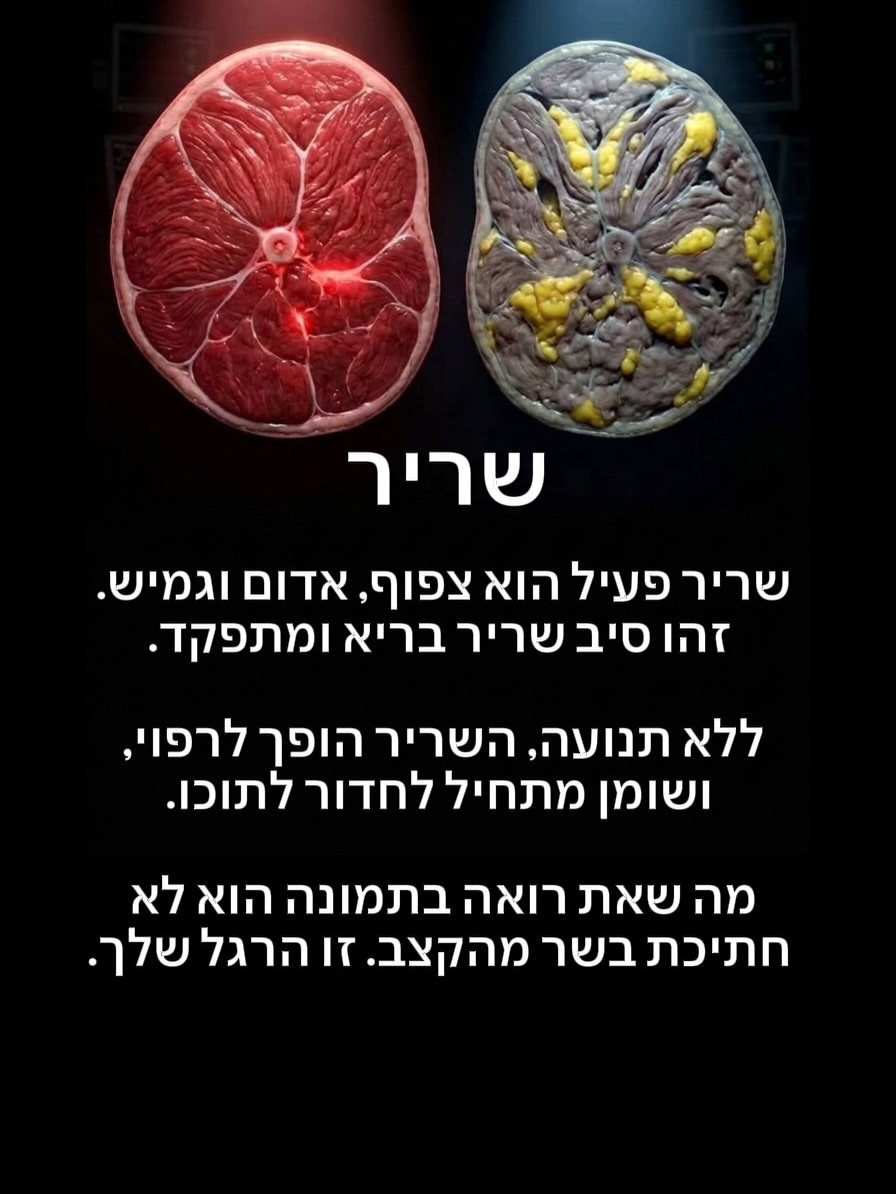
"תנועה מעודדת יצירת תאי עצב חדשים בהיפוקמפוס, האזור האחראי על הזיכרון, ומסייעת במניעת איבוד חומר אפור במוח."
מסקנת הבדיקה:
מחקרים מדעיים מאששים כי פעילות גופנית, ובמיוחד אימוני התנגדות ופעילות אירובית, מעודדים נוירוגנזה בהיפוקמפוס ותורמים לשימור נפח החומר האפור במוח, דבר המשפר תפקודים קוגניטיביים וזיכרון. (🟩)
chevron_right מקורות מדעיים: (4)
-
link
Physical exercise habits correlate with gray matter volume of the hippocampus in healthy adult humans.
Physical activity facilitates neurogenesis of dentate cells in the rodent hippocampus, a brain region critical for memory formation and spatial representation. Recent findings in humans also suggest that aerobic exercise can lead to increased hippocampal volume and enhanced cognitive functioning in children and elderly adults. However, the association between physical activity and hippocampal volume during the period from early adulthood through middle age has not been effectively explored. Here, we correlated the number of minutes of self-reported exercise per week with gray matter volume of the hippocampus using voxel-based morphometry (VBM) in 61 healthy adults ranging from 18 to 45 years of age. After controlling for age, gender, and total brain volume, total minutes of weekly exercise correlated significantly with volume of the right hippocampus. Findings highlight the relationship between regular physical exercise and brain structure during early to middle adulthood.…
PMID: 24336512
-
link
Chemotherapy-Induced Cognitive Impairment and Hippocampal Neurogenesis: A Review of Physiological Mechanisms and Interventions.
A wide range of cognitive deficits, including memory loss associated with hippocampal dysfunction, have been widely reported in cancer survivors who received chemotherapy. Changes in both white matter and gray matter volume have been observed following chemotherapy treatment, with reduced volume in the medial temporal lobe thought to be due in part to reductions in hippocampal neurogenesis. Pre-clinical rodent models confirm that common chemotherapeutic agents used to treat various forms of non-CNS cancers reduce rates of hippocampal neurogenesis and impair performance on hippocampally-mediated learning and memory tasks. We review the pre-clinical rodent literature to identify how various chemotherapeutic drugs affect hippocampal neurogenesis and induce cognitive impairment. We also review factors such as physical exercise and environmental stimulation that may protect against chemotherapy-induced neurogenic suppression and hippocampal neurotoxicity. Finally, we review pharmacological interventions that target the hippocampus and are designed to prevent or reduce the cognitive and neurotoxic side effects of chemotherapy.…
PMID: 34884513
-
link
The clinician's guide to prevention and treatment of osteoporosis.
Osteoporosis is the most common metabolic bone disease in the USA and the world. It is a subclinical condition until complicated by fracture(s). These fractures place an enormous medical and personal burden on individuals who suffer from them and take a significant economic toll. Any new fracture in an adult aged 50 years or older signifies imminent elevated risk for subsequent fractures, particularly in the year following the initial fracture. What a patient perceives as an unfortunate accident may be seen as a sentinel event indicative of bone fragility and increased future fracture risk even when the result of considerable trauma. Clinical or subclinical vertebral fractures, the most common type of osteoporotic fractures, are associated with a 5-fold increased risk for additional vertebral fractures and a 2- to 3-fold increased risk for fractures at other sites. Untreated osteoporosis can lead to a vicious cycle of recurrent fracture(s), often resulting in disability and premature death. In appropriate patients, treatment with effective antifracture medication prevents fractures and improves outcomes. Primary care providers and medical specialists are critical gatekeepers who can identify fractures and initiate proven osteoporosis interventions. Osteoporosis detection, diagnosis, and treatment should be routine practice in all adult healthcare settings. The Bone Health and Osteoporosis Foundation (BHOF) - formerly the National Osteoporosis Foundation - first published the Clinician's Guide in 1999 to provide accurate information on osteoporosis prevention and treatment. Since that time, significant improvements have been made in diagnostic technologies and treatments for osteoporosis. Despite these advances, a disturbing gap persists in patient care. At-risk patients are often not screened to establish fracture probability and not educated about fracture prevention. Most concerning, the majority of highest risk women and men who have a fracture(s) are not diagnosed and do not receive effective, FDA-approved therapies. Even those prescribed appropriate therapy are unlikely to take the medication as prescribed. The Clinician's Guide offers concise recommendations regarding prevention, risk assessment, diagnosis, and treatment of osteoporosis in postmenopausal women and men aged 50 years and older. It includes indications for bone densitometry as well as fracture risk thresholds for pharmacologic intervention. Current medications build bone and/or decrease bone breakdown and dramatically reduce incident fractures. All antifracture therapeutics treat but do not cure the disease. Skeletal deterioration resumes sooner or later when a medication is discontinued-sooner for nonbisphosphonates and later for bisphosphonates. Even if normal BMD is achieved, osteoporosis and elevated risk for fracture are still present. The diagnosis of osteoporosis persists even if subsequent DXA T-scores are above - 2.5. Ongoing monitoring and strategic interventions will be necessary if fractures are to be avoided. In addition to pharmacotherapy, adequate intake of calcium and vitamin D, avoidance of smoking and excessive alcohol intake, weight-bearing and resistance-training exercise, and fall prevention are included in the fracture prevention armamentarium. Where possible, recommendations in this guide are based on evidence from RCTs; however, relevant published data and guidance from expert clinical experience provides the basis for recommendations in those areas where RCT evidence is currently deficient or not applicable to the many osteoporosis patients not considered for RCT participation due to age and morbidity.…
PMID: 35478046
-
link
Early volumetric changes of hippocampus and medial prefrontal cortex following medial temporal lobe resection.
Previous studies have shown that cognitive demands and physical exercise stimulate adult neurogenesis in the dentate gyrus and hippocampus. Recent observations in healthy humans and patients with mild cognitive impairment moreover suggest that training-induced increases in hippocampal volume may be associated with improved memory performance. The corresponding plasticity processes in hippocampal volume may occur on timescales of months to years. For patients with focal lesions in this region, previous functional imaging studies suggest that increased recruitment of the contralateral hippocampus and extratemporal regions may be an important part of the reorganization of episodic memory. However, it is currently unclear whether focal damage to the medial temporal lobe (MTL) induces gray matter (GM) volume changes in the intact contralateral hippocampus and in connected network regions on a shorter timescale. We therefore investigated whether unilateral resection of the MTL, including the hippocampus, induces measurable volumetric changes in the contralateral hippocampus and in the default mode network (DMN). We recruited 31 patients with unilateral left (N = 19) or right (N = 12) hippocampal sclerosis undergoing MTL resection for treatment of drug-resistant epilepsy. Structural MRI was acquired immediately before and 3 months after surgery. Longitudinal voxel-based morphometry (VBM) analysis revealed a significant increase of right hippocampal volume following resection of the left anterior MTL. Furthermore, this patient group showed GM volume increases in the DMN. These results demonstrate significant structural plasticity of the contralateral hippocampus, even in patients with a long-standing unilateral hippocampal dysfunction and structural reorganization processes extending to distant, but functionally connected brain regions.…
PMID: 32421911
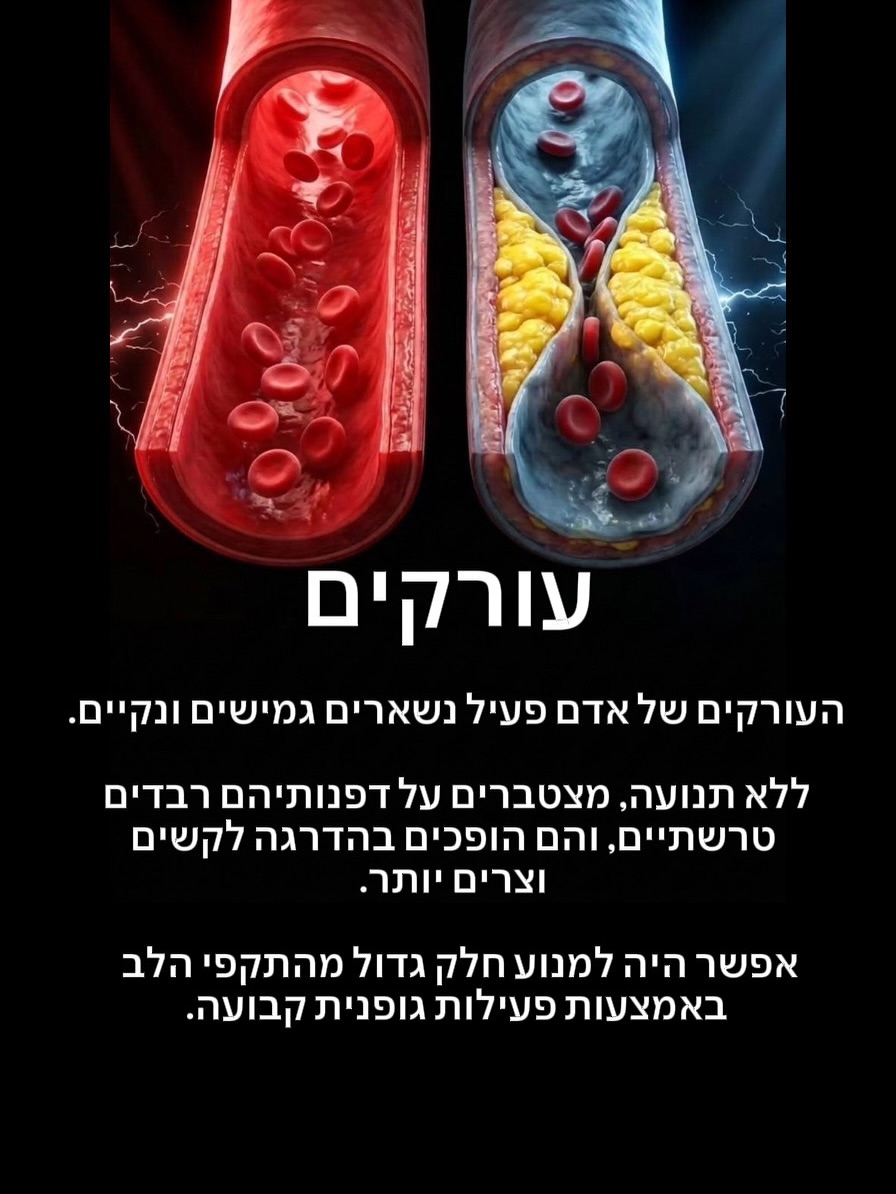
"חוסר בתנועה מוביל להצטברות רבדים טרשתיים על דפנות העורקים, מה שהופך אותם לקשים וצרים יותר."
מסקנת הבדיקה:
ספרות רפואית מצביעה על קשר ישיר בין אורח חיים יושבני לבין עלייה בסיכון לטרשת עורקים. פעילות גופנית סדירה נמצאה כגורם המפחית את עומס הפלאק בעורקים ומשפר את תפקוד האנדותל וכלי הדם. (🟩)
chevron_right מקורות מדעיים: (3)
-
link
Ultrasound-Assessed Brachial Artery Flow-Mediated Dilation and Carotid Plaque Burden as Markers of Vascular Health in Relation to Weekly Physical Activity Duration in Older Adults.
<b>Objectives</b>: This study assessed the association between physical activity and vascular endothelial function and carotid atherosclerotic plaques in older adults using ultrasound imaging. <b>Methods and Results</b>: A total of 60 older adults were divided into three groups based on weekly physical activity: low (<4 h/week), moderate (4-12 h/week), and high (>12 h/week). All participants underwent flow-mediated dilation (FMD) assessment and carotid ultrasound to determine plaque burden. Participants with moderate physical activity demonstrated greater FMD (12.3 ± 2.5%) than those with low (1.2 ± 1.8%) or high activity (7.1 ± 1.3%), and a lower carotid plaque burden. In adjusted logistic regression models, moderate activity remained independently associated with a lower likelihood of impaired FMD (OR 0.22; 95% CI 0.18-0.27) and lower carotid plaque burden (OR 0.16; 95% CI 0.11-0.19). <b>Conclusions</b>: Moderate physical activity was associated with more favorable vascular endothelial function and reduced carotid atherosclerosis in older adults, indicating an association with a more favorable vascular profile.…
PMID: 42072854
-
link
A latent class analysis of cardiometabolic risk factors and the predicted prevalence of subclinical atherosclerosis in middle-aged Swedish adults.
Previous research on cardiometabolic risk has mostly used a variable-centred approach, assessing risk factors separately or in predefined combinations. This study used a probabilistic modelling approach to identify distinct cardiometabolic risk classes and estimate the predicted prevalence of subclinical atherosclerosis. The analysis included 28,307 middle-aged adults from the Swedish CArdioPulmonary bioImage Study (2013–2018), linked to national registers. Eleven risk factors were assessed: smoking, alcohol consumption, sodium and fibre intake, physical activity, stress, waist circumference, triglycerides, HDL-cholesterol, blood pressure, and fasting glucose. Subclinical atherosclerosis was defined using coronary artery calcium (CAC) scores and the presence of carotid plaque. A three-step latent class analysis identified four cardiometabolic risk classes: “low fibre intake and normolipidemia” (55.2%, Class 1), “high sodium intake and normolipidemia” (12.8%, Class 2), “unhealthy lifestyle and heightened metabolic risk” (10.1%, Class 3), and “unhealthy lifestyle and high metabolic risk” (21.9%, Class 4). Predicted mean CAC scores ranged from 42.6 (Class 2, 95% CI 39.0–46.3) to 92.1 (Class 4, 95% CI 86.2–98.0). Predicted carotid plaque prevalence ranged from 51.6% (Class 2, 95% CI 50.6–52.6) to 60.8% (Class 4, 95% CI 59.8–61.9). Latent classes offered a complementary descriptive framework beyond single risk factors, supporting more tailored prevention according to risk profiles.…
PMID: 41781514
-
link
Cardiovascular ageing: hallmarks, signaling pathways, diseases and therapeutic targets.
Cardiovascular disease (CVD) predominantly affects elderly individuals and is the leading cause of morbidity, disability, and mortality worldwide. Systemic ageing, especially cardiovascular ageing, contributes to the development of CVD phenotypes and outcomes. Therefore, in this review, we innovatively summarize the five major etiologies and risk factors for cardiovascular ageing, including lifestyle and behavioral factors, metabolic disorders and physiological dysregulation, environmental exposures and physicochemical determinants, genetics and epigenetics, and host biology and sociodemographic determinants. Furthermore, we enumerate the structural and functional changes that occur in the cardiovascular ageing process. The twelve hallmarks of cardiovascular ageing, including genomic instability and epigenetic alterations, loss of proteostasis, mitochondrial dysfunction, oxidative stress, and inflammation; cellular dysfunction; cellular senescence; stem cell exhaustion; metabolic changes; and the renin‒angiotensin‒aldosterone system, β-adrenergic signaling, growth signaling, and mechanosignaling, stratify across three dimensions: molecular, cellular, and systemic levels. Given the elucidated role of cardiovascular ageing in diverse pathologies, we propose specific rejuvenation strategies to mitigate residual cardiovascular risk in older adults: targeting senescent cells, adjusting energy sensor pathways, addressing central inflammatory pathways, modulating neurocardiological dynamics, adopting healthy lifestyles, and assessing and preventing the degree of ageing. We also list FDA-approved drugs and clinical trials targeting cardiovascular ageing, thus serving as a cutting-edge reference for developing intervention strategies.…
PMID: 42010239
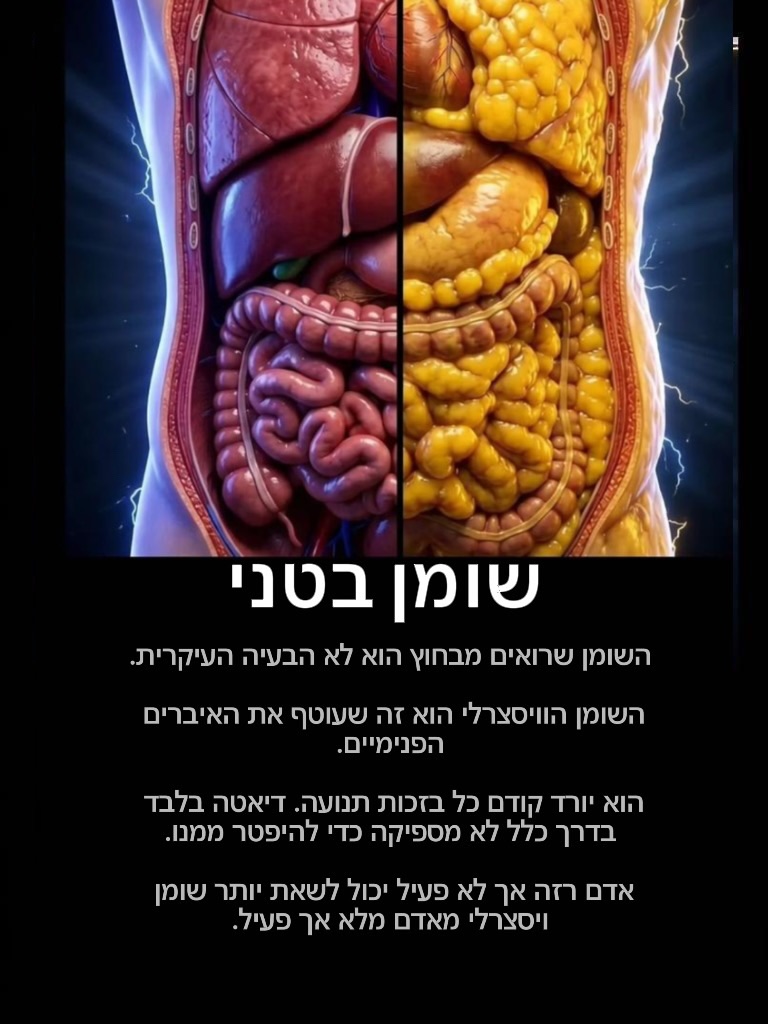
"שומן ויסרלי (בטני) מופחת בצורה היעילה ביותר באמצעות תנועה, ודיאטה בלבד לרוב אינה מספיקה כדי להיפטר ממנו."
מסקנת הבדיקה:
הספרות המדעית תומכת בכך ששילוב של תזונה ופעילות גופנית הוא האסטרטגיה היעילה ביותר להפחתת שומן ויסרלי. מחקרים מראים כי התערבויות המשלבות פעילות גופנית מניבות תוצאות טובות יותר בהפחתת שומן בטני מאשר שינויים תזונתיים בלבד. (🟩)
chevron_right מקורות מדעיים: (3)
-
link
An Energy-Reduced Mediterranean Diet, Physical Activity, and Body Composition: An Interim Subgroup Analysis of the PREDIMED-Plus Randomized Clinical Trial.
Strategies targeting body composition may help prevent chronic diseases in persons with excess weight, but randomized clinical trials evaluating lifestyle interventions have rarely reported effects on directly quantified body composition. To evaluate the effects of a lifestyle weight-loss intervention on changes in overall and regional body composition. The ongoing Prevención con Dieta Mediterránea-Plus (PREDIMED-Plus) randomized clinical trial is designed to test the effect of the intervention on cardiovascular disease prevention after 8 years of follow-up. The trial is being conducted in 23 Spanish research centers and includes men and women (age 55-75 years) with body mass index between 27 and 40 and metabolic syndrome. The trial reported herein is an interim subgroup analysis of the intermediate outcome body composition after 3-year follow-up, and data analysis was conducted from February 1 to November 30, 2022. Of 6874 total PREDIMED-Plus participants, a subsample of 1521 individuals, coming from centers with access to a dual energy x-ray absorptiometry device, underwent body composition measurements at 3 time points. Participants were randomly allocated to a multifactorial intervention based on an energy-reduced Mediterranean diet (MedDiet) and increased physical activity (PA) or to a control group based on usual care, with advice to follow an ad libitum MedDiet, but no physical activity promotion. The outcomes (continuous) were 3-year changes in total fat and lean mass (expressed as percentages of body mass) and visceral fat (in grams), tested using multivariable linear mixed-effects models. Clinical relevance of changes in body components (dichotomous) was assessed based on 5% or more improvements in baseline values, using logistic regression. Main analyses were performed in the evaluable population (completers only) and in sensitivity analyses, multiple imputation was performed to include data of participants lost to follow-up (intention-to-treat analyses). A total of 1521 individuals were included (mean [SD] age, 65.3 [5.0] years; 52.1% men). In comparison with the control group (n=761), participants in the intervention arm (n=760) showed greater reductions in the percentage of total fat (between group differences after 1-year, -0.94% [95% CI, -1.19 to -0.69]; 3 years, -0.38% [95% CI, -0.64 to -0.12] and visceral fat storage after 1 year, -126 g [95% CI, -179 to -73.3 g]; 3 years, -70.4 g [95% CI, -126 to -15.2 g] and greater increases in the percentage of total lean mass at 1 year, 0.88% [95% CI, 0.63%-1.12%]; 3-years 0.34% [95% CI, 0.09%-0.60%]). The intervention group was more likely to show improvements of 5% or more in baseline body components (absolute risk reduction after 1 year, 13% for total fat mass, 11% for total lean mass, and 14% for visceral fat mass; after 3-years: 6% for total fat mass, 6% for total lean mass, and 8% for visceral fat mass). The number of participants needed to treat was between 12 and 17 to attain at least 1 individual with possibly clinically meaningful improvements in body composition. The findings of this trial suggest a weight-loss lifestyle intervention based on an energy-reduced MedDiet and physical activity significantly reduced total and visceral fat and attenuated age-related losses of lean mass in older adults with overweight or obesity and metabolic syndrome. Continued follow-up is warranted to confirm the long-term consequences of these changes on cardiovascular clinical end points. isrctn.org Identifier: ISRCTN89898870.…
PMID: 37851444
-
link
Intermittent fasting and protein pacing are superior to caloric restriction for weight and visceral fat loss.
This study compared intermittent fasting and protein pacing (IF-P) versus a heart-healthy caloric restriction (CR) diet, matched for energy intake and physical activity energy expenditure, on body weight, total and visceral fat mass, and cardiometabolic health outcomes in adults with obesity. IF-P (n = 21) and CR (n = 20) were assessed pre- (week 0), mid- (week 5), and post- (week 9) intervention. Both groups reduced (p < 0.05) weight, total and visceral fat mass, blood pressure and lipids, and desire to eat food and increased proportion of fat-free mass. IF-P resulted in greater (p < 0.05) reductions in weight (-9% vs. -5%), total (-16% vs. -9%) and visceral (-33% vs. -14%) fat mass, and desire to eat (-17% vs. 1%) and increased fat-free mass percent (6% vs. 3%) compared with CR. These improvements were despite similar weekly total energy intake (IF-P, 9470 ± 550 vs. CR, 9095 ± 608 kcal/wk; p = 0.90) and physical activity energy expenditure (IF-P, 300 ± 150 vs. CR, 350 ± 200 kcal/d; p = 0.79). IF-P and CR optimize weight loss, body composition, cardiometabolic health, and hunger management, with IF-P providing greater benefits.…
PMID: 36575144
-
link
Lifestyle-Induced Visceral Fat Loss as a Key Target for Durable Cardiometabolic Health: MRI-Assessed 5- and 10-Year Follow-Up After 2 Clinical Trials.
<h4>Background</h4>During the 18-month CENTRAL (Effect of Weight-Loss Diet Strategies and Exercise on Dynamics of Body Fat Depots and Metabolic Rate) and DIRECT-PLUS (Dietary Intervention Randomized Controlled Trial Polyphenols Unprocessed) randomized controlled trials, participants achieved considerable reductions in abdominal and ectopic fat. We examined the long-term postintervention cardiometabolic profile associated with these changes.<h4>Methods</h4>We invited participants from CENTRAL (2012-2014) and DIRECT-PLUS (2017-2018), which evaluated dietary patterns (low-fat, healthy dietary guidelines and Mediterranean diet variants, including standard, low-carbohydrate, and polyphenol-enriched "green" Mediterranean diets) combined with structured physical activity. Participants underwent additional magnetic resonance imaging of visceral adipose tissue, deep subcutaneous adipose tissue (SAT), superficial SAT, intrahepatic fat, and intrapancreatic fat, along with clinical follow-up measurements, 5 and 10 years after completion of the trials.<h4>Results</h4>We reached 366 out of 381 eligible participants (96%) for follow-up. Despite complete weight regain, waist circumference and abdominal fat depots, including visceral adipose tissue, deep SAT, and superficial SAT, partially preserved their intervention-induced achievements at long-term follow-up (false discovery rate ≤0.01 for all). In contrast, postintervention reductions of intrahepatic fat and intrapancreatic fat were fully and excessively gained during follow-up, respectively (false discovery rate ≤0.01 for both). Each 10% intervention-induced loss of visceral adipose tissue, superficial SAT, and intrapancreatic fat were associated with long-term postintervention improvements in Metabolic Score for Insulin Resistance, composite risk score, and Metabolic Syndrome Severity Score (meta-analysis models adjusted to weight change, Mediterranean diet adherence and physical activity scores at follow-up, and further measures; all <i>P</i><0.05). Only 10% visceral adipose tissue loss, however, was independently associated with a 28% lower risk of incident type 2 diabetes (hazard ratio, 0.72 [95% CI, 0.54-0.94]; multivariable model) during follow-up.<h4>Conclusions</h4>This 5- and 10-year follow-up of 18-month clinical trials suggests that diet and physical activity lifestyle interventions may yield long-term improvements in cardiometabolic measures despite weight regain. A 10% reduction in visceral fat due to lifestyle interventions may reduce future type 2 diabetes risk by nearly 30%. Visceral fat loss rather than weight loss emerges as a key target for durable cardiometabolic health.<h4>Registration</h4>URL: https://www.clinicaltrials.gov; Unique identifiers: NCT01530724 and NCT03020186.…
PMID: 42227111
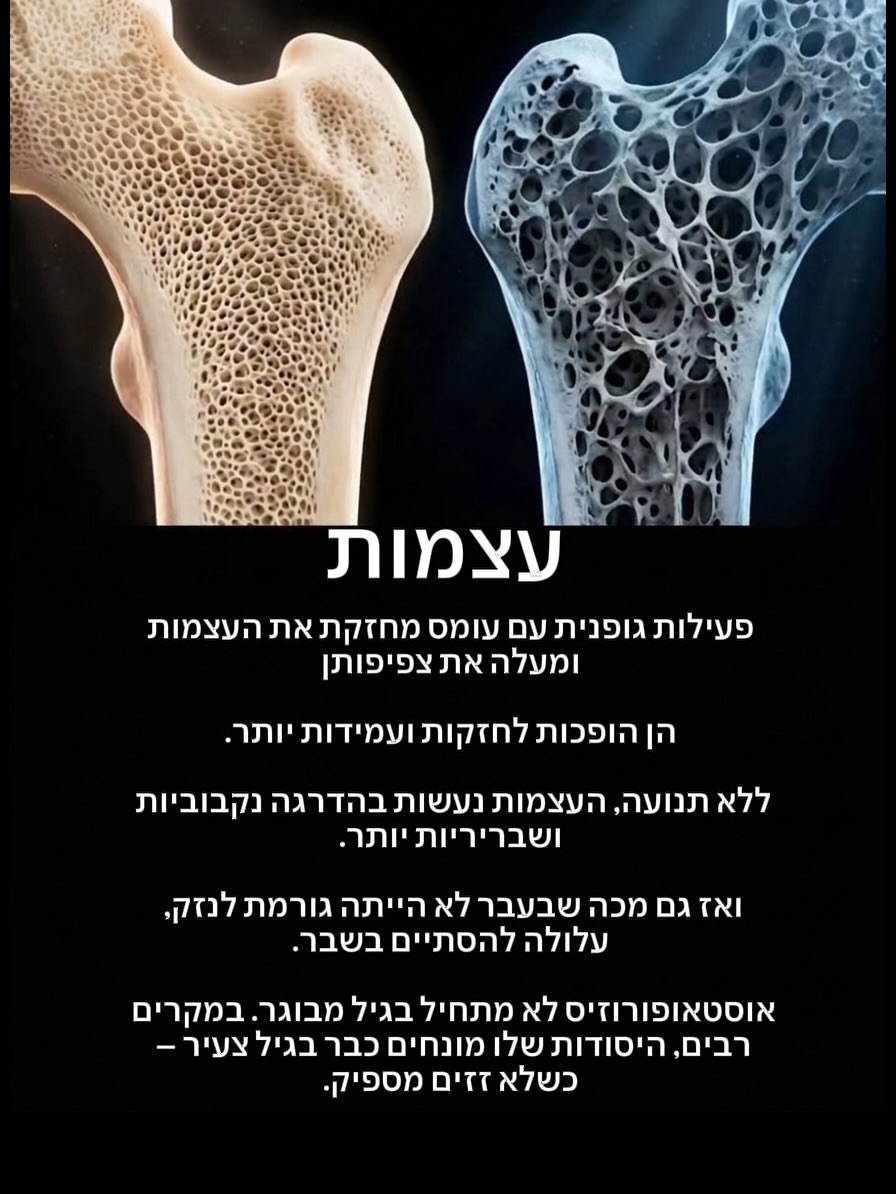
"פעילות גופנית עם עומס מחזקת את העצמות, מעלה את צפיפותן ומונעת אוסטאופורוזיס."
מסקנת הבדיקה:
פעילות גופנית נושאת משקל מוכרת קלינית כאמצעי מרכזי לחיזוק העצם, העלאת צפיפות המינרלים בעצם (BMD) ומניעת אוסטאופורוזיס ושברים בקרב אוכלוסיות בסיכון. (🟩)
chevron_right מקורות מדעיים: (3)
-
link
Effects of Different Types of Exercise on Bone Mineral Density in Postmenopausal Women: A Systematic Review and Meta-analysis.
In this sub-analysis of a comprehensive meta-analysis, we aimed to determine the effect of different types of exercise on (areal) bone mineral density (BMD) in postmenopausal women. A systematic review of the literature according to the PRISMA statement included (a) controlled trials, (b) with at least one exercise and one control group, (c) intervention ≥ 6 months, (d) BMD assessments at lumbar spine (LS), femoral neck (FN) or total hip (TH), (e) in postmenopausal women. Eight electronic databases were scanned without language restrictions up to March 2019. The present subgroup analysis was conducted as a mixed-effect meta-analysis with "type of exercise" as the moderator. The 84 eligible exercise groups were classified into (a) weight bearing (WB, n = 30) exercise, (b) (dynamic) resistance exercise (DRT, n = 18), (c) mixed WB&DRT interventions (n = 36). Outcome measures were standardized mean differences (SMD) for BMD-changes at LS, FN and TH. All types of exercise significantly affect BMD at LS, FN and TH. SMD for LS average 0.40 (95% CI 0.15-0.65) for DRT, SMD 0.26 (0.03-0.49) for WB and SMD 0.42 (0.23-0.61) for WB&DRT. SMD for FN were 0.27 (0.09-0.45) for DRT, 0.37 (0.12-0.62) for WB and 0.35 (0.19-0.51) for WB&DRT. Lastly, SMD for TH changes were 0.51 (0.28-0.74) for DRT, 0.40 (0.21-0.58) for WB and 0.34 (0.14-0.53) for WB&DRT. In summary, we provided further evidence for the favorable effect of exercise on BMD largely independent of the type of exercise. However, in order to generate dedicated exercise recommendations or exercise guideline, meta-analyses might be a too rough tool.…
PMID: 32785775
-
link
Nutrition and Osteoporosis Prevention.
Osteoporosis affects 50% of women and 20% of men after the age of 50. Fractures are associated with significant morbidity, increased mortality and altered quality of life. Lifestyle measures for fragility fracture prevention include good nutrition including adequate protein and calcium intakes, vitamin D sufficiency, and regular weight bearing physical exercise. Dietary protein is one of the most important nutritional considerations as it affects bone mineral density, trabecular and cortical microstructure, and bone strength. When calcium intake is sufficient, higher dietary protein intake is associated with lower risk of fracture. Dairy products are a valuable source of calcium and high quality protein. Dairy product consumption, particularly fermented dairy products, are associated with a lower risk of hip fracture and vegan diets are associated with increased fracture risk. Other dietary factors associated with reduced fracture risk include at least 5 servings per day of fruits and vegetables, regular tea drinking, adherence to a Mediterranean diet and other dietary patterns which provide fibers, polyphenols and fermented dairy products. Such dietary patterns may confer health benefits through their effect on gut microbiota composition and/or function. A balanced diet including minerals, protein, fruits and vegetables is an important element in the prevention of osteoporosis and of fragility fracture.…
PMID: 39322861
-
link
Nutritional intake and bone health.
Osteoporotic or fragility fractures affect one in two women and one in five men who are older than 50. These events are associated with substantial morbidity, increased mortality, and an impaired quality of life. Recommended general measures for fragility fracture prevention include a balanced diet with an optimal protein and calcium intake and vitamin D sufficiency, together with regular weight-bearing physical exercise. In this narrative Review, we discuss the role of nutrients, foods, and dietary patterns in maintaining bone health. Much of this information comes from observational studies. Bone mineral density, microstructure-estimated bone strength, and trabecular and cortical microstructure are positively associated with total protein intake. Several studies indicate that fracture risk might be lower with a higher dietary protein intake, provided that the calcium supply is sufficient. Dairy products are a valuable source of these two nutrients. Hip fracture risk appears to be lower in consumers of dairy products, particularly fermented dairy products. Consuming less than five servings per day of fruit and vegetables is associated with a higher hip fracture risk. Adherence to a Mediterranean diet or to a prudent diet is associated with a lower fracture risk. These various nutrients and dietary patterns influence gut microbiota composition or function, or both. The conclusions of this Review emphasise the importance of a balanced diet including minerals, protein, and fruit and vegetables for bone health and in the prevention of fragility fractures.…
PMID: 34242583
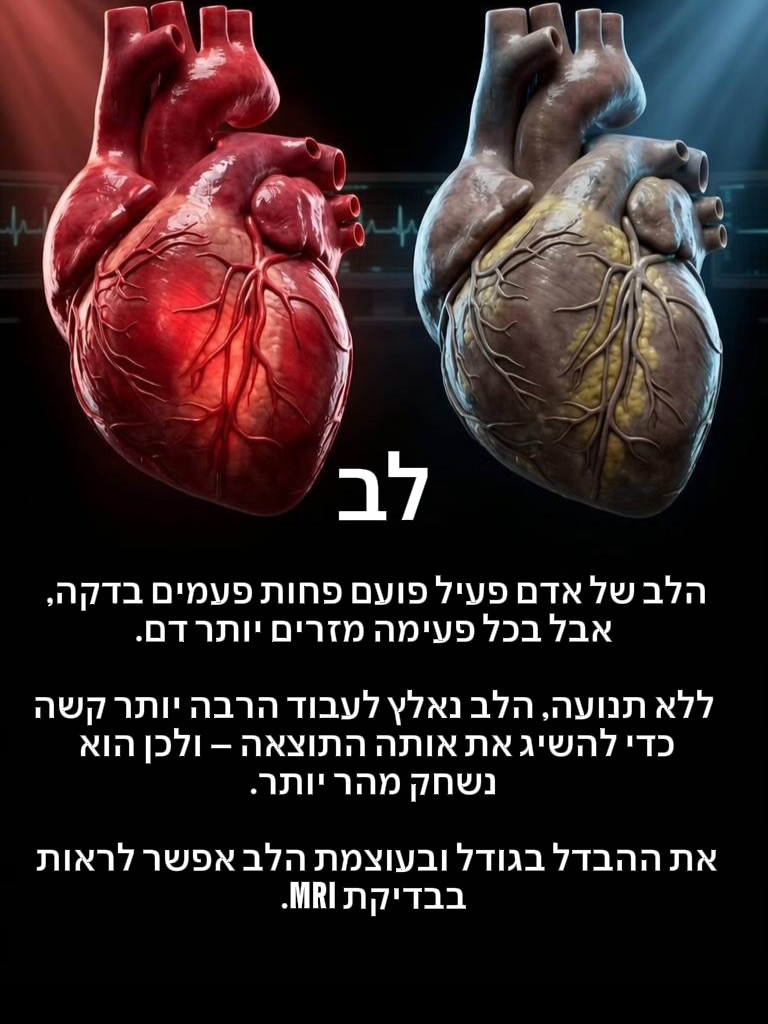
"פעילות גופנית משפרת את יעילות הלב, כך שהוא פועם פחות פעמים בדקה אך מזרים יותר דם בכל פעימה."
מסקנת הבדיקה:
פעילות גופנית אירובית מובילה להתאמות פיזיולוגיות בלב, הכוללות הגדלת נפח הפעימה (Stroke Volume) וירידה בדופק המנוחה, מה שמעיד על יעילות לבבית משופרת. (🟩)
chevron_right מקורות מדעיים: (3)
-
link
Cardiovascular aspects of running.
Running is an excellent means of conditioning the cardiovascular system. It is a highly aerobic activity that utilizes both fatty acids and carbohydrates for energy. The typical runner tends to have a slow resting pulse rate and a high maximal oxygen consumption. Echocardiographic studies show that distance runners have larger, thicker left ventricles than do sedentary controls; their hearts are more efficient than those of sedentary people, pumping a larger volume per beat. Physiologic findings on examination of well-trained runners can sometimes be confused with pathologic entities. The "athlete's heart," once believed to be an abnormal condition, is now recognized as representing a highly efficient organ. Runners are not immune to organic heart disease. Careful physical examination of the cardiovascular system, the resting EKG, and echocardiography are useful ways to screen young competitive athletes for cardiomyopathy, the leading cause of sudden death in this age group. Treadmill testing is often used as a screening test in middle-aged and older runners for underlying coronary atherosclerotic heart disease, the leading cause of sudden exercise-related death in this age category. Radionuclide exercise scans and, on occasion, coronary angiography will be of use when the diagnosis of coronary disease is still in doubt. Distance running has positive effects on a host of coronary risk factors, which may help to explain why chronic endurance exercise is associated with lower coronary death rates.…
PMID: 3902253
-
link
Cardiovascular adaptations to exercise and training.
The cardiovascular system provides the link between pulmonary ventilation and oxygen usage at the cellular level. During exercise, efficient delivery of oxygen to working skeletal and cardiac muscles is vital for maintenance of ATP production by aerobic mechanisms. The equine cardiovascular response to increased demand for oxygen delivery during exercise contributes largely to the over 35-fold increases in oxygen uptake that occur during submaximal exercise. Cardiac output during exercise increases greatly owing to the relatively high heart rates that are achieved during exercise. Heart rate increases proportionately with workload until heart rates close to maximal are attained. It is remarkable that exercise heart rates six to seven times resting values are not associated with a fall in stroke volume, which is maintained by splenic contraction, increased venous return, and increased myocardial contractibility. Despite the great changes in cardiac output, increases in blood pressure during exercise are maintained within relatively smaller limits, as both pulmonary and systemic vascular resistance to blood flow is reduced. Redistribution of blood flow to the working muscles during exercise also contributes greatly to the efficient delivery of oxygen to sites of greatest need. Higher work rates and oxygen uptake at submaximal heart rates after training imply an adaptation due to training that enables more efficient oxygen delivery to working muscle. Such an adaptation could be in either blood flow or arteriovenous oxygen content difference. Cardiac output during submaximal exercise does not increase after training, but studies using high-speed treadmills and measurement of cardiac output at maximal heart rates may reveal improvements in maximal oxygen uptake due to increased stroke volumes, as occurs in humans. Improvements in hemoglobin concentrations in blood during exercise after training are recognized, but at maximal exercise, hypoxemia may reduce arterial oxygen content. More effective redistribution of cardiac output to muscles by increased capillarization and more efficient oxygen diffusion to cells may also be an important means of increasing oxygen uptake after training.…
PMID: 3877552
-
link
Association of Smartwatch-Based Heart Rate and Physical Activity With Cardiorespiratory Fitness Measures in the Community: Cohort Study.
Resting heart rate (HR) and routine physical activity are associated with cardiorespiratory fitness levels. Commercial smartwatches permit remote HR monitoring and step count recording in real-world settings over long periods of time, but the relationship between smartwatch-measured HR and daily steps to cardiorespiratory fitness remains incompletely characterized in the community. This study aimed to examine the association of nonactive HR and daily steps measured by a smartwatch with a multidimensional fitness assessment via cardiopulmonary exercise testing (CPET) among participants in the electronic Framingham Heart Study. Electronic Framingham Heart Study participants were enrolled in a research examination (2016-2019) and provided with a study smartwatch that collected longitudinal HR and physical activity data for up to 3 years. At the same examination, the participants underwent CPET on a cycle ergometer. Multivariable linear models were used to test the association of CPET indices with nonactive HR and daily steps from the smartwatch. We included 662 participants (mean age 53, SD 9 years; n=391, 59% women, n=599, 91% White; mean nonactive HR 73, SD 6 beats per minute) with a median of 1836 (IQR 889-3559) HR records and a median of 128 (IQR 65-227) watch-wearing days for each individual. In multivariable-adjusted models, lower nonactive HR and higher daily steps were associated with higher peak oxygen uptake (VO Our findings suggest that smartwatch-based assessments are associated with a broad array of cardiorespiratory fitness responses in the community, including measures of global fitness (peak VO…
PMID: 38870519



עירעור על דוח זה
ספקו ראיות חדשות או הצביעו על אי דיוקים
נעדכן אותך על תוצאות הבדיקה
הוסיפו קישורים למחקרים או מקורות רפואיים מוכרים
העירעור נשלח בהצלחה!
המנוע המדעי שלנו יבדוק את הראיות שהגשתם. נעדכן אתכם באימייל עם התוצאות.
ניתוח מבוסס בינה מלאכותית
דוח זה נוצר באופן אוטומטי על ידי מערכת בינה מלאכותית ועשוי להכיל שגיאות, אי-דיוקים או מידע חלקי. הניתוח אינו מהווה ייעוץ רפואי, אבחנה או המלצה לטיפול, והוא אינו תחליף לדעתו של איש מקצוע רפואי מוסמך. יש להתייעץ עם רופא או מומחה מוסמך לפני קבלת כל החלטה רפואית. המידע מוצג לצרכי מידע כללי בלבד.
מידע זה מופק על ידי בינה מלאכותית ואינו מהווה תחליף לייעוץ רפואי מקצועי.