סריקה בתהליך...
הניתוח עשוי לארוך 30–90 שניות
הידעת?
הסרטון אינו מכיל תוכן רפואי
חושבים שחלה טעות?
אם לדעתכם הסרטון אכן עוסק בטענות רפואיות או בריאותיות, הוסיפו הסבר קצר ושלחו בקשה לבדיקה מחדש.
הבקשה התקבלה! נבדוק את הסרטון ונחזור אליכם.
אירעה שגיאה בשליחת הבקשה. נסו שוב.
דו״ח מאומת
הסרטון מציג מידע מדויק ומגובה במחקרים מדעיים אמינים.
סיכום
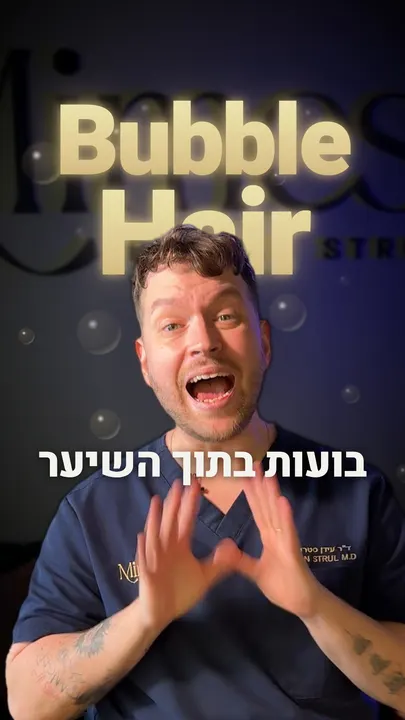
העדויות המדעיות תומכות במסר המרכזי של הפוסט, לפיו חימום שיער רטוב גורם לנזק מבני. הטענות המדעיות לגבי היווצרות תופעת ה-Bubble Hair, החלשת השערה ושבירתה, וכן הצורך בשימוש במחליק על שיער יבש בלבד – כולן נמצאו נכונות ומבוססות. בנוסף, העדויות מאשרות כי סיב שיער פגוע אינו יכול להשתקם באופן ביולוגי, והפתרון היחיד הוא גזיזת החלק הפגוע. לא נמצאו פערים משמעותיים או טענות שלא זכו למענה בספרות המקצועית.
analytics ניתוח טענות מבוסס ראיות
"חימום שיער רטוב בחום גבוה גורם למים שבו להפוך לאדים ויוצר בועות או חללים פנימיים בתוך סיב השערה, תופעה המכונה Bubble Hair."
מסקנת הבדיקה:
התופעה הידועה כ-Bubble Hair מתרחשת כאשר מים הכלואים בשיער רטוב רותחים והופכים לאדים עקב חום גבוה, מה שיוצר בועות וחללים פנימיים הפוגעים בשערה. הספרות המקצועית והמחקרים בנושא מאשרים באופן מלא מנגנון זה של נזק תרמי.
chevron_right ודאות הפסיקה: גבוהה
מידת הביטחון של המערכת בפסיקה — לא אחוז הנכונות של הטענה. ביטחון נמוך פירושו שהראיות מעטות או סותרות.
chevron_right מקורות מדעיים: (2)
-
link
A review of bubble hair deformity
Bubble hair deformity is an acquired abnormality characterized by air-filled cavity formations within the hair shaft, usually because of heat damage. Traditionally, bubble hair is diagnosed by visualization of characteristic bubbles under light microscopy. The increased utilization of trichoscopy (scalp dermoscopy) has led to its adoption in the diagnosis of many hair and scalp conditions, including bubble hair deformity. We sought to review clinical reports evaluating the patient profile, use of diagnostic imaging, and treatment options for bubble hair deformity. A systematic search of PubMed was performed in February 2021 using various keywords. Titles and abstracts were screened, leading to the selection of 11 case reports or series. The majority of patients were middle-aged Caucasian women who had used a heated tool to dry or style wet hair. Treatment consisted of cessation of heated tool usage. Light microscopy visualization of characteristic hair shaft cavities was used for diagnosis of bubble hair deformity in reports published prior to 2012. Diagnosis by trichoscopy was used in more recent reports. Our findings support the use of trichoscopy as a convenient and noninvasive method of diagnosing bubble hair deformity. More clinical studies are needed to evaluate the development of bubble hair deformity in ethnic hair.…
OpenAlex · PMID: 35486091
-
link
Effects of thermal treatments with a curling iron on hair fiber.
The effect of curling hair with a curling iron has been investigated. Possibilities of thermal damage with repeated curling according to, and in violation of, the manufacturer's specifications have been studied. The propensity of hair surface to damage depends on the moisture content of the hair, and these experiments have been conducted in both wet and dry conditions, with and without application of tension, and with short or prolonged times. Scanning electron microscopic (SEM) examination revealed that fibers treated under the dry condition (50% RH) show radial and axial cracking along with scale edge fusion. Similar thermal treatment on wet hair resulted in severe damage of the type described above, as well as bubbling and buckling of the cuticle due to the formation and escaping of steam from the fiber. Fibers subjected to repeated curling in the dry condition show slight increases in tensile mechanical properties, characteristic of a crosslinked fiber. Fibers treated with conditioners show an improvement in characteristic life, especially in the case of low-molecular-weight conditioners, such as CETAB, which can penetrate into the hair fiber (shown by TOF-SIMS analysis).…
PubMed · PMID: 15037918
"חללים ובועות אלו בסיב השערה מחלישים אותה וגורמים לשבירתה, מה שגורם לשיער להיראות בטעות כאילו אינו אורך."
מסקנת הבדיקה:
חימום שיער רטוב בחום גבוה גורם למים הכלואים בסיב השערה להתאדות במהירות ויוצר חללים ובועות פנימיות הידועים כ-Bubble hair הפוגעים בשלמות הקראטין. פגיעה מבנית זו מחלישה משמעותית את השערה ומובילה לשבירה מוגברת, המקזזת את קצב הצמיחה ויוצרת את המראה השגוי כאילו השיער אינו מתארך. הספרות המקצועית והקלינית בדרמטולוגיה מאשרות מנגנון זה במלואו.
chevron_right ודאות הפסיקה: גבוהה
מידת הביטחון של המערכת בפסיקה — לא אחוז הנכונות של הטענה. ביטחון נמוך פירושו שהראיות מעטות או סותרות.
chevron_right מקורות מדעיים: (4)
-
link
Hair weathering
Patients with damaged hair most oen complain of hair shedding or of reduced hair growth and do not realize that their hair problems are due to hair breakage. Dermoscopy is very useful for showing patients the signs of hair weathering, which include trichorrhexis nodosa, trichoclasis, trichoschisis, trichoptilosis, and bubble hair.…
OpenAlex · DOI: 10.1201/b18594-13
-
link
Application of single hair fibre tensile measurements to create an industry‐standard heat damage scale for hair
The use of heat styling appliances is a rapidly growing segment within the hair care market. However, despite significant levels of academic investigation into the impact of high temperature on the structure and mechanical properties of the hair fibre, the industry does not yet have a standardized method of heat damage measurement to enable consumers and independent evaluation laboratories to objectively compare the performance of different heat styling tools. We discuss the available experimental methods to support such a standardized method and conclude that the well-established approach of measuring single-fibre tensile strength provides the best option. We then explore the sensitivity to heat damage of the various wet and dry single-fibre tensile parameters in order to identify the optimal combination for inclusion in our hair damage metric. Using the selected combination of 8 different wet single-fibre tensile strength parameters, we now propose a robust, reproducible and consumer-relevant 6-point heat damage scale. We demonstrate the relevance of the new damage scale to a range of on-market heated hair straighteners and explore the human perception of hair treated with heated straighteners delivering different damage levels according to the new scale. Based on this, we show a good correlation between the technical damage scale and the human perception of damage on hair tresses.…
OpenAlex · PMID: 40708551
-
link
Prevention of Hair Heat Damage via Thermoresponsive Organic Silicon-Modified Keratin.
Heat damage is a common phenomenon that often occurs when drying and straightening hair. After heat damage, the hydrophobic barrier on the hair's surface becomes disrupted, thereby altering the hair's hydrophilicity. Meanwhile, during the process of heat damage, the rupture of the hair's cuticles causes the hair to become dry and rough, with a decrease in gloss and a decline in mechanical properties. This study utilized epoxy silane and hydrolyzed wool keratin to synthesize a thermally responsive organic silicon-modified keratin (OSK) to prevent hair from heat damage. OSK was synthesized from epoxy silane and hydrolyzed keratin, with yield determined by quantifying free amino groups. Its hair-care performance was evaluated through assessments of hair surface morphology, mechanical properties, and optical gloss, and by combing test and contact angle measurements. Mechanisms underlying surface hydrophobicity and hair scale protection were investigated using FTIR, XPS, and DSC. Specific performance parameters were evaluated using a single-fiber strength tester and a multifunctional hair-testing instrument. FTIR confirmed successful covalent grafting, with synthesis optimized to a 90.67% yield. OSK forms a protective film on hair surfaces, verified by SEM, XPS, and TEM, restoring damaged hair hydrophobicity to a 117° contact angle and enhancing thermal protection to 136° upon heating. Beyond hydrophobic-barrier restoration, OSK improved hair gloss by 30.26% and reduced frizz by 39.33%, while restoring the key performance of virgin hair. It also provides exceptional water-repellency protection and sensory enhancement. Under thermal stress, the protective film mechanically increased tensile strength by 6.58% and yield zone tensile force by 4.65%. This article demonstrates that OSK is an effective heat-sensitive agent. When damaged by heat sources such as hair dryers, it will form a protective film on the surface of the hair, thereby protecting the surface properties of the hair.…
Europe PMC · PMID: 41683497
-
link
Protection and Restoration of Damaged Hair via a Polyphenol Complex by Promoting Mechanical Strength, Antistatic, and Ultraviolet Protection Properties
In this study, we developed a hair-coating polyphenol complex (PPC) that showed ultraviolet (UV) protection properties, antistatic features, and the capability to enhance the mechanical strength of damaged hair. PPCs prepared with different ratios of tannic acid (TA), gallic acid (GA), and caffeic acid (CA) simultaneously increased the self-recovery of damaged hair by protecting the cuticle. PPC prevented light from passing through the damaged hair during exposure to UV radiation. Moreover, surfaces coated with PPC1 (TA:GA:CA, 100:20:0.5) exhibited a higher conductivity than surfaces coated with PPCs with other ratios of TA, GA, and CA, with a resistance of 0.72 MΩ. This influenced the antistatic performance of the surface, which exhibited no electrical attraction after being subjected to an electrostatic force. Additionally, damaged hair exhibited a significant increase in durability and elasticity after coating with a PPC1-containing shampoo, with a tensile strain of up to 2.06× post-treatment, indicating the recovery of the damaged cuticle by the PPC complex. Furthermore, PPC1-containing shampoo prevented damage by scavenging excess reactive oxygen species in the hair. The combination effect promoted by the natural PPC offers new insights into hair treatment and paves the way for further exploration of hair restoration technology.…
OpenAlex · PMID: 37504184
"יש להשתמש במחליק שיער אך ורק על שיער יבש ובטמפרטורה הנמוכה ביותר האפשרית."
מסקנת הבדיקה:
השימוש במחליק על שיער רטוב גורם לאידוי מים מהיר וליצירת בועות פנימיות הפוגעות במבנה הקרטין של השערה ובשלמותה. ההמלצה להשתמש במכשיר על שיער יבש ובטמפרטורה נמוכה מעוגנת בעקרונות פיזיקליים וקוסמטיים שנועדו למנוע נזק תרמי ושבירה.
chevron_right ודאות הפסיקה: גבוהה
מידת הביטחון של המערכת בפסיקה — לא אחוז הנכונות של הטענה. ביטחון נמוך פירושו שהראיות מעטות או סותרות.
chevron_right מקורות מדעיים: (3)
-
link
Crystallin Fusion Proteins Improve the Thermal Properties of Hair
Styling hair with straightening irons is a popular daily hair routine that significantly damage the hair keratin fiber due to the high temperature applied. In this study, we investigate the effect of two fusion proteins based on the human eye γD-crystallin conjugated with a keratin-based peptide (KP-Cryst Wt and KP-Cryst Mut) on hair exposed to thermal damage. The mutant form was designed to improve protein stability and promote interaction with the hair. Through the study, it was demonstrated the protection of Asian and Caucasian virgin hair's structure by the pretreatments with the KP-Cryst fusion proteins. After hair thermal exposure, a higher water content was quantified by TGA on the hair fibers pretreated with the fusion proteins (about 38% for the KP-Cryst Wt and 44% for the KP-Cryst Mut). Also, negligible alterations in hair fibers' stiffness were observed after iron application, demonstrating the proteins capacity to effectively prevent the conversion of keratin α-helix structure into β-sheets. The results proved the capacity of the fusion proteins to bind to hair and protect it against high temperatures', supporting the development of new formulations based on the KP-Cryst proteins.…
OpenAlex · PMID: 31709253
-
link
Application of single hair fibre tensile measurements to create an industry‐standard heat damage scale for hair
The use of heat styling appliances is a rapidly growing segment within the hair care market. However, despite significant levels of academic investigation into the impact of high temperature on the structure and mechanical properties of the hair fibre, the industry does not yet have a standardized method of heat damage measurement to enable consumers and independent evaluation laboratories to objectively compare the performance of different heat styling tools. We discuss the available experimental methods to support such a standardized method and conclude that the well-established approach of measuring single-fibre tensile strength provides the best option. We then explore the sensitivity to heat damage of the various wet and dry single-fibre tensile parameters in order to identify the optimal combination for inclusion in our hair damage metric. Using the selected combination of 8 different wet single-fibre tensile strength parameters, we now propose a robust, reproducible and consumer-relevant 6-point heat damage scale. We demonstrate the relevance of the new damage scale to a range of on-market heated hair straighteners and explore the human perception of hair treated with heated straighteners delivering different damage levels according to the new scale. Based on this, we show a good correlation between the technical damage scale and the human perception of damage on hair tresses.…
OpenAlex · PMID: 40708551
-
link
New approach for hair keratin characterization: Use of the confocal Raman spectroscopy to assess the effect of thermal stress on human hair fibre.
<h4>Objective</h4>The objective of our research was to investigate the heat-protecting effect of a product ex vivo and in vivo on human hair fibres.<h4>Methods</h4>A preparatory study was carried out in order to determine an optimal threshold of thermal stress. For this, the structure of cross-sections of the hair fibre was observed by optical microscopy. Then, Scanning Electron Microscopy (SEM) and Confocal Raman Spectroscopy (CRS) were applied to analyse ex vivo and in vivo morphological and molecular damage in hair structure after heat stress. Finally, in vivo tests were used to collect consumer perception.<h4>Results</h4>The preparatory study enabled us to determine an optimal stress threshold of 10 heating cycle for SEM and 5 heating cycle for CRS. Based on spectral hierarchical classification using Ward's clustering algorithm, the ex vivo Raman results show that the spectral signature of the hair treated and heated is very close to the negative control. This shows that the product preserves the keratin structure after thermal stress. These results were also confirmed by an in vivo Raman analysis performed on hair samples from 5 donors. In concordance with Raman results, SEM shows that treated hair presents lesser "bubbles" and "crackling" on the hair surface. Finally, the in vivo studies proved that hair was more protected from heat.<h4>Conclusion</h4>The authors concluded that the product shows protective properties with respect to morphological and molecular heat damage. We also demonstrate that the product promotes the α-helix keratin conformation and preserves the S-S disulfide bands.…
Europe PMC · PMID: 35916243
"סיב שיער שניזוק והתפתחו בו בועות אינו יכול להתרפא, והדרך היחידה לטפל בכך היא לחתוך את החלק הפגוע."
מסקנת הבדיקה:
סיב השערה מורכב מתאים מתים ולכן אין לו יכולת ביולוגית לרפא את עצמו או לתקן נזקים מבניים כמו בועות חום. תכשירים קוסמטיים עשויים לשפר זמנית את מראה השיער, אך הדרך היחידה להסיר לצמיתות את החלק הפגוע היא לגזום אותו.
chevron_right ודאות הפסיקה: גבוהה
מידת הביטחון של המערכת בפסיקה — לא אחוז הנכונות של הטענה. ביטחון נמוך פירושו שהראיות מעטות או סותרות.
Idan Strul MD | ד״ר עידן סטרול רופא שיער
דירוג זה מבוסס על 3 דוחות אימות קודמים.
האם הדוח הזה היה מועיל לך?
מה היה פחות טוב? (רשות)
תודה על הפידבק!
עירעור על דוח זה
ספקו ראיות חדשות או הצביעו על אי דיוקים
נעדכן אותך על תוצאות הבדיקה
הוסיפו קישורים למחקרים או מקורות רפואיים מוכרים
העירעור נשלח בהצלחה!
המנוע המדעי שלנו יבדוק את הראיות שהגשתם. נעדכן אתכם באימייל עם התוצאות.
ניתוח מבוסס בינה מלאכותית
דוח זה נוצר באופן אוטומטי על ידי מערכת בינה מלאכותית ועשוי להכיל שגיאות, אי-דיוקים או מידע חלקי. הניתוח אינו מהווה ייעוץ רפואי, אבחנה או המלצה לטיפול, והוא אינו תחליף לדעתו של איש מקצוע רפואי מוסמך. יש להתייעץ עם רופא או מומחה מוסמך לפני קבלת כל החלטה רפואית. המידע מוצג לצרכי מידע כללי בלבד.
מידע זה מופק על ידי בינה מלאכותית ואינו מהווה תחליף לייעוץ רפואי מקצועי.