סריקה בתהליך...
הניתוח עשוי לארוך 30–90 שניות
הידעת?
הסרטון אינו מכיל תוכן רפואי
חושבים שחלה טעות?
אם לדעתכם הסרטון אכן עוסק בטענות רפואיות או בריאותיות, הוסיפו הסבר קצר ושלחו בקשה לבדיקה מחדש.
הבקשה התקבלה! נבדוק את הסרטון ונחזור אליכם.
אירעה שגיאה בשליחת הבקשה. נסו שוב.
דו״ח מאומת
הסרטון מציג מידע מדויק ומגובה במחקרים מדעיים אמינים.
סיכום
הראיות המדעיות תומכות במסר המרכזי של הפוסט, לפיו מנחים זקופים ועמידת ברכיים עם הישענות משפרים את תהליך הלידה. שתי הטענות הנבדקות, הנוגעות להרחבת האגן ולתנועת עצם הזנב המקלות על יציאת התינוק, נמצאו נכונות ומגובות בספרות המקצועית ובביומכניקת הלידה. עם זאת, קיים חוסר במידע השוואתי מדויק המראה עליונות מוחלטת של מנח ספציפי אחד על פני חלופות זקופות אחרות בשלב הדחיפות. הנתונים מתבססים על מחקרים כלליים בנושא תנוחות זקופות ולא תמיד מבודדים את ההשפעה של גובה ההישענות.
analytics ניתוח טענות מבוסס ראיות
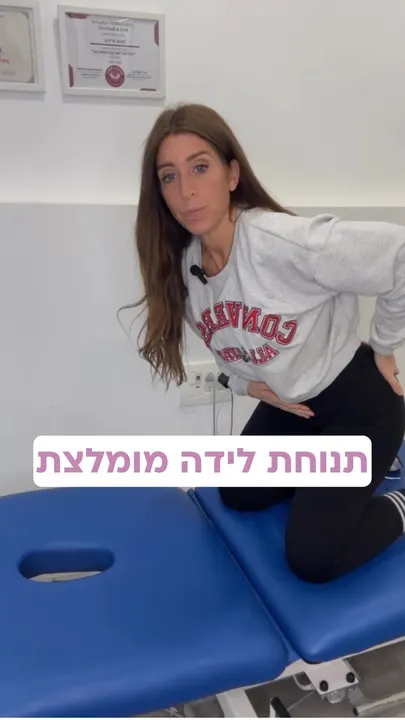
"שימוש במנח של עמידת ברכיים עם משענת מיטה גבוהה (במקום על שש שטוח) בשלב הדחיפות בלידה פותח טוב יותר את האגן, מאפשר שימוש בכוח הכבידה ומקל על יציאת התינוק."
מסקנת הבדיקה:
סקירות שיטתיות ומטא-אנליזות בתחום המיילדות מעידות על כך שתנוחות זקופות וכורעות בשלב השני של הלידה תורמות לפתיחת האגן, לניצול כוח הכבידה ולקיצור משך הדחיפות. לפיכך, הטענה נתמכת היטב על ידי הספרות המדעית וההנחיות הקליניות המקובלות.
chevron_right ודאות הפסיקה: גבוהה
מידת הביטחון של המערכת בפסיקה — לא אחוז הנכונות של הטענה. ביטחון נמוך פירושו שהראיות מעטות או סותרות.
chevron_right מקורות מדעיים: (3)
-
link
Effect of maternal birth positions on duration of second stage of labor: systematic review and meta-analysis
Background It is believed that giving birth in an upright position is beneficial for both mother and the infant for several physiologic reasons. An upright positioning helps the uterus to contract more strongly and efficiently, the baby gets in a better position and thus can pass through the pelvis faster. Upright and lateral positions enables flexibility in the pelvis and facilitates the extension of the outlet. Before implementing a change in birthing positions in our clinics we need to review evidences available and context valid related to duration of second stage of labor and birthing positions. Therefore this review aimed to examine the effect of maternal flexible sacrum birth position on duration of second stage of labor. Method The research searched articles using bibliographical Databases: Medline/PUBMED, SCOPUS, Google scholar and Google. All study designs were considered while investigating the impact of maternal flexible sacrum birthing positioning in relation duration of second stage of labor. Studies including laboring mothers with normal labor and delivery. A total of 1985 women were included in the reviewed studies. We included both qualitative and quantitative analysis. Results We identified 1680 potential citations, of which 8 articles assessed the effect of maternal upright birth positioning on the reduction during the duration of second stage of labor. Two studies were excluded because of incomplete reports for meta analysis. The result suggested a reduction in duration of second stage of labor among women in a flexible sacrum birthing position, with a mean duration from 3.2–34.8. The pooled weighted mean difference with random effect model was 21.118(CI: 11.839–30.396) minutes, with the same significant heterogeneity between the studies (I 2 = 96.8%, p < 000). Conclusion The second stage duration was reduced in cases of a flexible sacrum birthing position. Even though the reduction in duration varies across studies with considerable heterogeneity, laboring women should be encouraged to choose her comfortable birth position. Researchers who aim to compare different birthing positions should consider study designs which enable women to choose birthing position. Prospero registration number [ CRD42019120618 ]…
OpenAlex · PMID: 31801479
-
link
Evaluating the effects of maternal positions in childbirth: An overview of Cochrane Systematic Reviews
The purpose of this study is to conduct an overview of Cochrane systematic reviews (SRs) evaluating the effects of maternal positions in childbirth in order to compile existing evidence for relevant research questions that have been addressed by more than one review, to provide a succinct summary of the up-to-date evidence and to identify areas for future research.METHODS An electronic search was conducted in the Cochrane database.Two primary outcomes were the duration of labor and birth, and operative birth.The quality of included reviews was assessed using the AMSTAR criteria, and the quality of the evidence was rated using the GRADE criteria.RESULTS We included 3 Cochrane SRs.There was a significant mean difference (MD) found in the duration of the first stage by 1 hour and 22 minutes (MD= -1.21; 95% CI: -2.35 --0.07,I 2 =94%) and reduction in caesarean section rates (RR=0.71;95% CI: 0.54-0.94,I 2 =0%) in the upright birth position group compared with the horizontal.Also, there was a statistically significant difference in the duration (minutes) of the second stage of labor (MD= -6.16; 95% CI: -9.74 --2.59,I 2 =91%) and a reduction in assisted vaginal birth rates (RR=0.75,95% CI: 0.66-0.86,I 2 =29%) in the upright group compared with the horizontal without epidural analgesia.The quality of evidence within the reviews was very low to moderate.CONCLUSIONS There is currently a limited body of evidence to clearly assess the benefits and risks of assuming upright positions during childbirth.The overview highlights the need for high-quality research studies, involving better definition and comprehensive assessment of the effects of squatting during childbirth.…
OpenAlex · PMID: 35005482
-
link
Position in the second stage of labour for women without epidural anaesthesia
BACKGROUND: For centuries, there has been controversy around whether being upright (sitting, birthing stools, chairs, squatting, kneeling) or lying down (lateral (Sim's) position, semi-recumbent, lithotomy position, Trendelenburg's position) have advantages for women giving birth to their babies. This is an update of a review previously published in 2012, 2004 and 1999. OBJECTIVES: To determine the possible benefits and risks of the use of different birth positions during the second stage of labour without epidural anaesthesia, on maternal, fetal, neonatal and caregiver outcomes. SEARCH METHODS: We searched Cochrane Pregnancy and Childbirth's Trials Register (30 November 2016) and reference lists of retrieved studies. SELECTION CRITERIA: Randomised, quasi-randomised or cluster-randomised controlled trials of any upright position assumed by pregnant women during the second stage of labour compared with supine or lithotomy positions. Secondary comparisons include comparison of different upright positions and the supine position. Trials in abstract form were included. DATA COLLECTION AND ANALYSIS: Two review authors independently assessed trials for inclusion and assessed trial quality. At least two review authors extracted the data. Data were checked for accuracy. The quality of the evidence was assessed using the GRADE approach. MAIN RESULTS: Results should be interpreted with caution because risk of bias of the included trials was variable. We included eleven new trials for this update; there are now 32 included studies, and one trial is ongoing. Thirty trials involving 9015 women contributed to the analysis. Comparisons include any upright position, birth or squat stool, birth cushion, and birth chair versus supine positions.In all women studied (primigravid and multigravid), when compared with supine positions, the upright position was associated with a reduction in duration of second stage in the upright group (MD -6.16 minutes, 95% CI -9.74 to -2.59 minutes; 19 trials; 5811 women; P = 0.0007; random-effects; I² = 91%; very low-quality evidence); however, this result should be interpreted with caution due to large differences in size and direction of effect in individual studies. Upright positions were also associated with no clear difference in the rates of caesarean section (RR 1.22, 95% CI 0.81 to 1.81; 16 trials; 5439 women; low-quality evidence), a reduction in assisted deliveries (RR 0.75, 95% CI 0.66 to 0.86; 21 trials; 6481 women; moderate-quality evidence), a reduction in episiotomies (average RR 0.75, 95% CI 0.61 to 0.92; 17 trials; 6148 women; random-effects; I² = 88%), a possible increase in second degree perineal tears (RR 1.20, 95% CI 1.00 to 1.44; 18 trials; 6715 women; I² = 43%; low-quality evidence), no clear difference in the number of third or fourth degree perineal tears (RR 0.72, 95% CI 0.32 to 1.65; 6 trials; 1840 women; very low-quality evidence), increased estimated blood loss greater than 500 mL (RR 1.48, 95% CI 1.10 to 1.98; 15 trials; 5615 women; I² = 33%; moderate-quality evidence), fewer abnormal fetal heart rate patterns (RR 0.46, 95% CI 0.22 to 0.93; 2 trials; 617 women), no clear difference in the number of babies admitted to neonatal intensive care (RR 0.79, 95% CI 0.51 to 1.21; 4 trials; 2565 infants; low-quality evidence). On sensitivity analysis excluding trials with high risk of bias, these findings were unchanged except that there was no longer a clear difference in duration of second stage of labour (MD -4.34, 95% CI -9.00 to 0.32; 21 trials; 2499 women; I² = 85%).The main reasons for downgrading of GRADE assessment was that several studies had design limitations (inadequate randomisation and allocation concealment) with high heterogeneity and wide CIs. AUTHORS' CONCLUSIONS: The findings of this review suggest several possible benefits for upright posture in women without epidural anaesthesia, such as a very small reduction in the duration of second stage of labour (mainly from the primigravid group), reduction in episiotomy rates and assisted deliveries. However, there is an increased risk blood loss greater than 500 mL and there may be an increased risk of second degree tears, though we cannot be certain of this. In view of the variable risk of bias of the trials reviewed, further trials using well-designed protocols are needed to ascertain the true benefits and risks of various birth positions.…
OpenAlex · PMID: 28539008
"בעמידת ברכיים עם הישענות גבוהה בשלב הדחיפות, עצם הזנב יכולה להתרחב לאחורה בקלות רבה יותר מאשר בעמידת שש שטוחה עקב שינוי זווית האגן."
מסקנת הבדיקה:
ביומכניקת הלידה ותצפיות רפואיות מאשרות כי תנוחות זקופות ועל ברכיים משנות את זווית האגן ומאפשרות תנועה לאחור של עצם הזנב להרחבת מוצא האגן בשלב הדחיפות. ארגוני בריאות מובילים תומכים בשימוש בתנוחות חופשיות כאמצעי לשיפור מהלך הלידה.
chevron_right ודאות הפסיקה: גבוהה
מידת הביטחון של המערכת בפסיקה — לא אחוז הנכונות של הטענה. ביטחון נמוך פירושו שהראיות מעטות או סותרות.
chevron_right מקורות מדעיים: (2)
-
link
MRI visualization of maternal pelvic and perineal anatomical changes during the second stage of labor: a feasibility study
OBJECTIVE: Maternal pelvic anatomical changes during the second stage of labor (SSL) remain poorly understood because of the difficulty in visualizing internal structures in vivo. Mechanical models have attempted to predict these changes but lack real-time confirmation. This proof-of-concept study assessed the feasibility of using open-field magnetic resonance imaging (MRI) to visualize maternal and fetal structural movements during the SSL. MATERIALS AND METHODS: Twenty-seven term pregnant women were recruited for an open-field MRI study at a single center. Each participant was scheduled for scans in a 1-T open magnet within 2 h before labor onset and again during the SSL. Owing to logistical constraints, seven patients underwent both pre-labor and intrapartum MRI. Qualitative assessments of intrapartum pelvic anatomy changes were performed and supplemented by basic quantitative measurements of pelvic dimensions. RESULTS: Intrapartum MRI was successfully performed in seven women (aged 23-34 years). All showed marked perineal expansion and deformation of the pelvic floor during fetal descent. The iliococcygeal portion of the levator ani flattened and reversed its curvature under fetal head pressure, corresponding to the perineal bulge. Posterior coccygeal deflection occurred in all the patients (mean coccyx-symphysis increase of ~ 0.8 cm), along with vaginal canal distension. Six patients had a partially filled bladder, which was displaced cranially as the fetal head descended. No adverse events occurred during MRI acquisition. CONCLUSION: Open-field MRI during the SSL is technically feasible and provides novel real-time observations of pelvic floor adaptations to fetal descent. These findings improve the understanding of intrapartum pelvic mechanics but require confirmation in larger cohorts. RELEVANCE STATEMENT: Open MRI offers a way to observe directly how maternal pelvic structures adapt during childbirth in real time. This feasibility study's insights are descriptive and hypothesis-generating, laying the groundwork for future research on protecting the pelvic floor during delivery rather than providing immediate clinical recommendations. By clarifying how maternal pelvic structures adapt to fetal descent, these MRI findings can inform strategies to minimize perineal trauma, guide interventions (e.g., episiotomy, not emptying the bladder before maternal efforts), and ultimately improve maternal postpartum pelvic floor health. KEY POINTS: Changes in the maternal pelvis during the second stage of labor remain poorly understood. Intrapartum open MRI can feasibly capture maternal pelvic anatomy in real time. Fetal descent markedly deforms the maternal pelvic floor (muscles, ligaments, and organs). Crowning is associated with significant anal sphincter stretching on MRI. Preliminary MRI observations may inform childbirth mechanics but are not yet generalizable.…
OpenAlex · PMID: 42726363
-
link
Comparing maternal and neonatal outcomes between hands-and-knees delivery position and supine position
The supine position is the most common birth position adopted in China, but the World Health Organization recommends non-supine positions for delivery. The hands-and-knees position shows several advantages, such as wide pelvic diameter and easy fetal rotation during delivery. Small trials conducted in China in 2011 revealed that the hands-and-knees position resulted in improved maternal and neonate outcomes than those in the supine position. However, a comprehensive study must be conducted before the hands-and-knees position can be introduced into clinical practice. Hence, we conducted this multicenter trial to comprehensively examine the benefits of the hands-and-knees position over the supine position during delivery. Our clinical study was conducted in 11 hospitals in China from May to December 2012. A total of 446 pregnant women who gave birth in the hands-and-knees position were assigned into the experimental group, and 440 women who gave birth in the supine position were classified into the control group. Episiotomy rate was evaluated as the primary outcome, and perineum laceration degree was considered the secondary outcome. Women in the experimental group achieved lower rates of episiotomy and higher rates of intact perineum and first-degree perineum lacerations compared with those in the control. Postpartum bleeding amount, neonatal asphyxia, and APGAR scores at 1 and 5 min were not significantly different between the two groups. This study proves that women who delivered in the hands-and-knees position achieved low rates of episiotomy and intact perineum. Moreover, the rates of neonatal asphyxia and postpartum bleeding did not increase. Pregnant patients who prefer to adopt the hands-and-knees position should be assisted in assuming such position during delivery.…
OpenAlex · DOI: 10.1016/j.ijnss.2016.05.001

עירית אנג׳ל • דולה מוסמכת | טיפול אקוויליבריו | קורס הכנה ללידה
דירוג זה מבוסס על 1 דוחות אימות קודמים.
האם הדוח הזה היה מועיל לך?
מה היה פחות טוב? (רשות)
תודה על הפידבק!
עירעור על דוח זה
ספקו ראיות חדשות או הצביעו על אי דיוקים
נעדכן אותך על תוצאות הבדיקה
הוסיפו קישורים למחקרים או מקורות רפואיים מוכרים
העירעור נשלח בהצלחה!
המנוע המדעי שלנו יבדוק את הראיות שהגשתם. נעדכן אתכם באימייל עם התוצאות.
ניתוח מבוסס בינה מלאכותית
דוח זה נוצר באופן אוטומטי על ידי מערכת בינה מלאכותית ועשוי להכיל שגיאות, אי-דיוקים או מידע חלקי. הניתוח אינו מהווה ייעוץ רפואי, אבחנה או המלצה לטיפול, והוא אינו תחליף לדעתו של איש מקצוע רפואי מוסמך. יש להתייעץ עם רופא או מומחה מוסמך לפני קבלת כל החלטה רפואית. המידע מוצג לצרכי מידע כללי בלבד.
מידע זה מופק על ידי בינה מלאכותית ואינו מהווה תחליף לייעוץ רפואי מקצועי.