סריקה בתהליך...
הניתוח עשוי לארוך 30–90 שניות
הידעת?
הסרטון אינו מכיל תוכן רפואי
חושבים שחלה טעות?
אם לדעתכם הסרטון אכן עוסק בטענות רפואיות או בריאותיות, הוסיפו הסבר קצר ושלחו בקשה לבדיקה מחדש.
הבקשה התקבלה! נבדוק את הסרטון ונחזור אליכם.
אירעה שגיאה בשליחת הבקשה. נסו שוב.
דו״ח מאומת
הסרטון מציג מידע מדויק ומגובה במחקרים מדעיים אמינים.
סיכום
העדויות המדעיות תומכות במלואן במסרים המרכזיים של הסרטון בנושא זיהוי, טיפול ומניעה של אימפטיגו. כל הטענות שנבדקו, החל מהמופע הקלאסי של הנגעים וגורמי המחלה ועד לאפשרויות הטיפול המקומי או הפומי והנחיות ההיגיינה לחזרה למסגרות, נמצאו מדויקות לחלוטין ומעוגנות בהנחיות קליניות מקובלות. לא נמצאו פערים משמעותיים בין תוכן הסרטון לבין הספרות הרפואית העדכנית בתחום.
analytics ניתוח טענות מבוסס ראיות
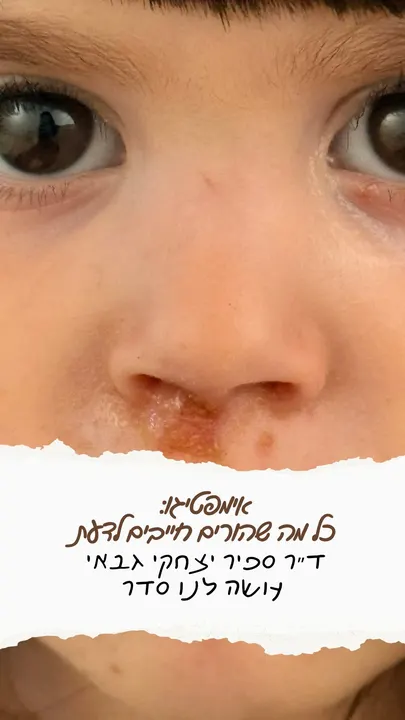
"המופע הקלאסי של אימפטיגו הוא שלפוחית או פצע שטחי שמתכסה בגלד בצבע דבש, המופיע לרוב סביב האף והפה אך יכול להופיע בכל מקום בגוף."
מסקנת הבדיקה:
המופע הקלאסי של אימפטיגו שאינו שלפוחיות מתאפיין בפצעים או שלפוחיות שטחיות המכוסים בגלד צהבהב דמוי דבש, הנפוצים בעיקר סביב האף והפה אך יכולים להופיע בכל מקום בגוף. עובדה זו מעוגנת היטב בספרות הרפואית ובהנחיות המקצועיות לזיהומי עור נפוצים.
chevron_right ודאות הפסיקה: גבוהה
מידת הביטחון של המערכת בפסיקה — לא אחוז הנכונות של הטענה. ביטחון נמוך פירושו שהראיות מעטות או סותרות.
chevron_right מקורות מדעיים: (4)
-
link
Vulvar Erosions in a Child: A Case of Vulvar Impetigo
To the Editors: We present a case of a 5-year-old girl who was diagnosed with nonbullous vulvar impetigo. Bacterial impetigo is one of the most common pediatric skin infections. However, the vulva is a rare location for this infection. The text provides valuable information on the diagnosis and treatment of this condition, as well as a discussion of the differential diagnosis of vulvar erosions. A 5-year-old girl with no relevant past medical history was brought to the Emergency Room with a vulvar erosion of 3-day duration (Fig. 1). The erosion was itchy but not painful and no other mucocutaneous lesions were observed. There were no associated symptoms such as fever or irritability. A sample was taken for culture, which revealed the growth of Streptococcus pyogenes. Polymerase chain reaction for herpes virus was negative. Serologies for HIV, syphilis and hepatitis were also negative. The patient was diagnosed with nonbullous vulvar impetigo and treated with 2% mupirocin ointment for 5 days, resulting in complete resolution of the lesion.FIGURE 1.: Superficial erosion present on vulva. Note the honey-colored crust on the external right labia.Bacterial impetigo is one of the most common pediatric skin infections, especially among children 2–5 years of age.1 Impetigo presents in nonbullous (70% of cases) and bullous (30% of cases) forms.2 Nonbullous forms (ie, impetigo contagiosa) are caused by S. pyogenes or Staphylococcus aureus and bullous forms are caused by S. aureus. Nonbullous impetigo usually affects the face and extremities, being the vulva a rare location/with vulvar involvement being rare. Poor hygiene and skin lesions with disruption of the epidermis barrier are well-established risk factors for impetigo.2 Nonbullous impetigo usually presents with a honey-colored crust, which provides the key to diagnosis. However, in mucosae and macerated areas, such as genitalia, the crust can be missing, as observed in our case, where only a faint crust was visible on the right labia. The differential diagnosis of a vulvar erosion includes: traumatic lesion, sexually transmitted disease (such as genital herpes, syphilitic chancre or soft chancre), nonsexually transmitted infection (such as impetigo, ecthyma, folliculitis, furuncle, perianal streptococcal dermatitis, erythrasma, cellulitis or candidiasis), aphthae, bullous autoimmune disease and acute genital ulceration (Lipschütz ulcer).3,4 For limited impetigo, topical antibiotics are the preferred treatment, while oral antibiotic therapy should be reserved for extensive cases.5 This case underscores the importance of considering a broad range of differential diagnoses and complementary tests, including microbiology samples, to establish an accurate diagnosis when the clinical presentation is atypical.…
OpenAlex · PMID: 38063507
-
link
IMPETIGO, DESCRIPTION, ETIOLOGY, EPIDEMIOLOGY, PATHOPHYSIOLOGY, EVALUATION, DIFFERENTIAL DIAGNOSIS, TREATMENT, PROGNOSIS AND COMPLICATIONS
Introduction: Impetigo is a common infection of the superficial layers of the epidermis that is highly contagious and usually originated by gram-positive bacteria, this disease manifests with the presence of erythematous plaques with a yellow crust, which may become itchy or painful. Diagnosis is usually based on signs and symptoms alone. Treatment involves topical and oral antibiotics and symptomatic care. Objective: to detail current information related to impetigo, description, etiology, epidemiology, pathophysiology, evaluation, differential diagnosis, treatment, prognosis and complications. Methodology: a total of 37 articles were analyzed in this review, including review and original articles, as well as clinical cases, of which 28 bibliographies were used because the other articles were not relevant to this study. The sources of information were PubMed, Google Scholar and Cochrane; the terms used to search for information in Spanish, Portuguese and English were: impetigo, cutaneous bacterial infection, S. aureus, streptococcal, bullous impetigo. Results: Impetigo accounts for approximately 10% of skin complaints in the pediatric population and the main pathogens involved include Staphylococcus aureus and Streptococcus pyogenes. There are two common variants of impetigo: non-blistering (70%) and blistering (30%)Streptococcus pyogenes (group A streptococcus) is one of the most important bacterial causes of skin and soft tissue infections (STBI) worldwide. Impetigo is a non-life-threatening infection, but can lead to acute post-streptococcal glomerulonephritis. Conclusions: Impetigo is a common disease in early life, especially in warm and humid climates. The infection can be blistering or non-blistering and is usually caused by Staphylococcus aureus and Streptococcus pyogenes. The infection usually affects the face, but can occur anywhere else on the body with a laceration, abrasion, insect bite, or other trauma. History and physical examination are paramount for diagnosis, which is usually based on symptoms and clinical manifestations alone. Treatment strategies for impetigo differ, depending on whether the condition is localized or generalized, as well as resistance patterns to the causative agents and current guidelines. Topical antibiotics alone or in combination with systemic antibiotics are most frequently used for treatment. The prognosis is usually good and complications are rare. KEY WORDS: impetigo, S. aureus, blistering, cutaneous, skin.…
OpenAlex · DOI: 10.36713/epra13948
-
link
Impetigo: Rapid Evidence Review.
Impetigo is a superficial skin infection that most commonly affects children 2 to 5 years of age. In the United States, more than 3 million cases of impetigo occur annually. Impetigo can be nonbullous (70%) or bullous (30%) and is most commonly caused by group A streptococcus and Staphylococcus aureus. Diagnosis of impetigo is based primarily on clinical examination and should be suspected in individuals with erythematous papules that progress to ruptured vesicles or bullae over 4 to 6 days, forming honey-colored crusts. Risk factors for impetigo include disruptions to the skin barrier, poor hygiene, crowded living environments, living in hot and humid climates, malnutrition, and diabetes. Topical mupirocin 2% ointment or retapamulin 1% ointment are the recommended initial treatments for mild, nonbullous and bullous impetigo. Oral antibiotics, such as dicloxacillin or cephalexin, should be targeted to group A streptococci and S. aureus and are recommended for outbreaks to decrease infection transmission or for severe, multilesional disease that does not respond to topical therapy within 3 to 5 days. Reducing the spread and recurrence of impetigo includes good hand hygiene, thoroughly washing objects used by people with impetigo, and refraining from returning to work or school until 12 to 24 hours after initiating antibiotic treatment or clinical improvement occurs.…
PubMed · PMID: 41839109
-
link
Impetigo.
Impetigo is a common superficial bacterial infection of the skin, with a global disease burden of greater than 140 million. Children are more affected than adults and incidence decreases with age. Principal pathogens implicated include Staphylococcus aureus and Streptococcus pyogenes. There are two common variants of impetigo: nonbullous (70%) and bullous (30%). Nonbullous impetigo is caused by S. aureus and S. pyogenes whereas bullous impetigo is caused by S. aureus. The classic appearance of distinctive honey-colored, crusted legions aids in diagnosis, which is most often based on clinical presentation. The disease is generally mild and felt to be self-limited; however, antimicrobial treatment is often initiated to reduce spread and shorten clinical course. Treatment for limited impetigo is topical whereas oral therapy is recommended for extensive cases. Rising rates of bacterial resistance to standard treatment regimens should inform treatment decisions. Complications, while rare, can occur.…
PubMed · PMID: 33105179
"הטיפול באנטיביוטיקה אינו חייב להיות דרך הפה תמיד; במספר קטן של נגעים מספיקה משחה אנטיביוטית מקומית, ואילו בפיזור רחב מעדיפים אנטיביוטיקה פומית."
מסקנת הבדיקה:
הטיפול המקובל באימפטיגו מוגבל (מספר נגעים קטן) מתבסס על משחות אנטיביוטיות מקומיות, בעוד שזיהומים נרחבים ומפושטים מטופלים באנטיביוטיקה פומית. עמדה זו מעוגנת היטב בהנחיות קליניות ובסקירות שיטתיות בספרות הרפואית.
chevron_right ודאות הפסיקה: גבוהה
מידת הביטחון של המערכת בפסיקה — לא אחוז הנכונות של הטענה. ביטחון נמוך פירושו שהראיות מעטות או סותרות.
chevron_right מקורות מדעיים: (5)
-
link
Treatment Strategies: A Systematic Review of The Advancements of Topical Antibiotics for Impetigo
Impetigo is a highly contagious bacterial skin infection affecting primarily children aged 2–5 years but also other age groups. It is predominantly caused by Staphylococcus aureus and Streptococcus pyogenes, with occasional involvement of anaerobic bacteria. Nonbullous impetigo accounts for 70% of cases and presents with characteristic golden-yellow crusting, while bullous impetigo manifests with toxin-induced fragile bullae. Effective management is crucial to address discomfort, cosmetic issues, and prevent complications. Topical antibiotics are first-line treatments for localized infections, while systemic antibiotics are reserved for severe or widespread cases. The increasing prevalence of antibiotic resistance, especially to mupirocin and fusidic acid, highlights the importance of adopting evidence-based treatment for effective strategies. Methods: This systematic review adheres to PRISMA 2020 guidelines. Eligible studies from 2014 to 2024 were identified through databases including PubMed, Embase, and Cochrane Library using terms related to impetigo treatment and antibiotic resistance. Studies evaluating the efficacy, safety, and resistance trends of antibiotics and alternative therapies were included. Data were extracted on demographics, interventions, outcomes, and adverse effects. Results: Emerging treatments, such as ozenoxacin, have shown promising results, offering superior efficacy and safety profiles compared to traditional agents like mupirocin and fusidic acid. Ozenoxacin demonstrated faster bacterial clearance and clinical resolution with minimal resistance development. Resistance to mupirocin and fusidic acid is increasingly concerning, highlighting the need for alternative therapies. Systemic antibiotics, including cephalexin and dicloxacillin, remain crucial for severe cases, but their use requires careful monitoring to mitigate adverse effects. Discussion: Antibiotic resistance poses a significant challenge in impetigo management. Topical therapies like ozenoxacin represent effective first-line options for localized infections, while systemic antibiotics address severe cases. Public health strategies emphasizing antibiotic stewardship, hygiene education, and accessible healthcare are essential to reduce the global burden of impetigo. Research on head-to-head comparisons of newer and traditional therapies will further refine treatment guidelines. Conclusion: Advances in impetigo management, particularly the introduction of ozenoxacin, offer effective solutions for localized infections. However, antibiotic resistance trends necessitate ongoing surveillance and research to optimize treatment strategies and improve patient outcomes globally.…
OpenAlex · DOI: 10.59141/.v7i2.365
-
link
Interventions for impetigo.
Impetigo is a common, superficial bacterial skin infection, which is most frequently encountered in children. There is no generally agreed standard therapy, and guidelines for treatment differ widely. Treatment options include many different oral and topical antibiotics as well as disinfectants. This is an updated version of the original review published in 2003. To assess the effects of treatments for impetigo, including non-pharmacological interventions and 'waiting for natural resolution'. We updated our searches of the following databases to July 2010: the Cochrane Skin Group Specialised Register, the Cochrane Central Register of Controlled Trials (CENTRAL), MEDLINE (from 2005), EMBASE (from 2007), and LILACS (from 1982). We also searched online trials registries for ongoing trials, and we handsearched the reference lists of new studies found in the updated search. Randomised controlled trials of treatments for non-bullous, bullous, primary, and secondary impetigo. Two independent authors undertook all steps in data collection. We performed quality assessments and data collection in two separate stages. We included 57 trials in the first version of this review. For this update 1 of those trials was excluded and 12 new trials were added. The total number of included trials was, thus, 68, with 5578 participants, reporting on 50 different treatments, including placebo. Most trials were in primary impetigo or did not specify this.For many of the items that were assessed for risk of bias, most studies did not provide enough information. Fifteen studies reported blinding of participants and outcome assessors.Topical antibiotic treatment showed better cure rates than placebo (pooled risk ratio (RR) 2. 24, 95% confidence interval (CI) 1.61 to 3.13) in 6 studies with 575 participants. In 4 studies with 440 participants, there was no clear evidence that either of the most commonly studied topical antibiotics (mupirocin and fusidic acid) was more effective than the other (RR 1.03, 95% CI 0.95 to 1.11).In 10 studies with 581 participants, topical mupirocin was shown to be slightly superior to oral erythromycin (pooled RR 1.07, 95% CI 1.01 to 1.13). There were no significant differences in cure rates from treatment with topical versus other oral antibiotics. There were, however, differences in the outcome from treatment with different oral antibiotics: penicillin was inferior to erythromycin, in 2 studies with 79 participants (pooled RR 1.29, 95% CI 1.07 to 1.56), and cloxacillin, in 2 studies with 166 participants (pooled RR 1.59, 95% CI 1.21 to 2.08).There was a lack of evidence for the benefit of using disinfectant solutions. When 2 studies with 292 participants were pooled, topical antibiotics were significantly better than disinfecting treatments (RR 1.15, 95% CI 1.01 to 1.32).The reported number of side-effects was low, and most of these were mild. Side-effects were more common for oral antibiotic treatment compared to topical treatment. Gastrointestinal effects accounted for most of the difference.Worldwide, bacteria causing impetigo show growing resistance rates for commonly used antibiotics. For a newly developed topical treatment, retapamulin, no resistance has yet been reported. There is good evidence that topical mupirocin and topical fusidic acid are equally, or more, effective than oral treatment. Due to the lack of studies in people with extensive impetigo, it is unclear if oral antibiotics are superior to topical antibiotics in this group. Fusidic acid and mupirocin are of similar efficacy. Penicillin was not as effective as most other antibiotics. There is a lack of evidence to support disinfection measures to manage impetigo.…
PubMed · PMID: 22258953
-
link
Emerging Treatment Strategies for Impetigo in Endemic and Nonendemic Settings: A Systematic Review.
Impetigo affects approximately 162 million children worldwide at any given time. Lack of consensus on the most effective treatment strategy for impetigo and increasing antibiotic resistance continue to drive research into newer and alternative treatment options. We conducted a systematic review to assess the effectiveness of new treatments for impetigo in endemic and nonendemic settings. We searched PubMed, MEDLINE, CINAHL, Web of Science, and Embase via Scopus for studies that explored treatments for bullous, nonbullous, primary, and secondary impetigo published between August 1, 2011, and February 29, 2020. We also searched online trial registries and hand-searched the reference lists of the included studies. We used the revised Cochrane risk of bias (version 2.0) tool for randomized trials and the National Heart, Lung, and Blood Institute for nonrandomized uncontrolled studies to assess the risk of bias. We included 10 studies that involved 6651 participants and reported on 9 treatments in the final analysis. Most clinical trials targeted nonbullous impetigo or did not specify this. The risk of bias varied among the studies. In nonendemic settings, ozenoxacin 1% cream appeared to have the strongest evidence base compared with retapamulin and a new minocycline formulation. In endemic settings, oral co-trimoxazole and benzathine benzylpenicillin G injection were equally effective in the treatment of severe impetigo. Mass drug administration intervention emerged as a promising public health strategy to reduce the prevalence of impetigo in endemic settings. This review highlights the limited research into new drugs used for the treatment of impetigo in endemic and nonendemic settings. Limited recent evidence supports the use of topical ozenoxacin or retapamulin for impetigo treatment in nonendemic settings, whereas systemic antibiotics and the mass drug administration strategy have evidence for use in endemic settings. Given the troubling increase in resistance to existing treatments, there is a clear need to ensure the judicious use of antibiotics and to develop new treatments and alternative strategies; this is particularly important in endemic settings. PROSPERO identifier: CRD42020173042.…
PubMed · PMID: 34053699
-
link
A systematic review and meta-analysis of treatments for impetigo.
Impetigo is a common clinical problem seen in general practice. Uncertainty exists as to the most effective treatment, or indeed if treatment is necessary. To determine the most effective treatment for impetigo in a systemically well patient. Systematic review and meta-analysis. Databases were searched for relevant studies. The Cochrane highly sensitive randomised controlled trial (RCT) search string was employed and combined with the word 'impetigo' as the MeSH term and keyword. The bibliographies of relevant articles were searched for additional references. RCTs that were either double- or observer-blind, and involved systemically well patients of any age in either primary or secondary care settings, were included. Studies that selected patients on the basis of skin swab results were excluded, as were studies that were not in English. Cure or improvement of impetigo reported at seven to 14 days from start of treatment was the primary outcome measure. Meta-analysis was performed on homogeneous studies. Three hundred and fifty-nine studies were identified, of which 16 met the inclusion criteria. Meta-analysis demonstrated that topical antibiotics are more effective than placebo (odds ratio [OR] = 2.69, 95% confidence interval [CI] = 1.49 to 4.86). There is weak evidence for the superiority of topical antibiotics over some oral antibiotics, such as erythromycin (OR = 0.48, 95% CI = 0.23 to 1.00). There is no significant difference between the effects of mupirocin and fusidic acid (OR = 1.76, 95% CI = 0.77 to 4.03). This review found limited high-quality evidence to inform the treatment of impetigo. From that which is available, we would recommend the use of a topical antibiotic for a period of seven days in a systemically well patient with limited disease. Further research is needed on the role of flucloxacillin and non-antibiotic treatments for impetigo.…
PubMed · PMID: 12939895
-
link
Interventions for impetigo.
Impetigo is a common superficial bacterial skin infection, most frequently encountered in children. There is no standard therapy and guidelines for treatment differ widely. Treatment options include many different oral and topical antibiotics as well as disinfectants. To assess the effects of treatments for impetigo, including waiting for natural resolution. We searched the Skin Group Specialised Trials Register (March 2002), Cochrane Central Register of Controlled Trials (CENTRAL, Issue 1 2002), the National Research Register (2002), MEDLINE (from 1966 to January 2003), EMBASE (from 1980 to March 2000) and LILACS (November 2001). We handsearched the Yearbook of Dermatology (1938-1966), the Yearbook of Drug Therapy (1949-1966), used reference lists of articles and contacted pharmaceutical companies. Randomised controlled trials of treatments for non-bullous and bullous, primary and secondary impetigo. All steps in data collection were done by two independent reviewers. We performed quality assessments and data collection in two separate stages. We included 57 trials including 3533 participants in total which studied 20 different oral and 18 different topical treatments. CURE OR IMPROVEMENT: Topical antibiotics showed better cure rates than placebo (pooled odds ratio (OR) 6.49, 95% confidence interval (CI) 3.93 to 10.73), and no topical antibiotic was superior (pooled OR of mupirocin versus fusidic acid 1.76, 95% CI 0.69 to 2.16). Topical mupirocin was superior to oral erythromycin (pooled OR 1.22, 95% CI 1.05 to 2.97). In most other comparisons, topical and oral antibiotics did not show significantly different cure rates, nor did most trials comparing oral antibiotics. Penicillin was inferior to erythromycin and cloxacillin and there is little evidence that using disinfectant solutions improves impetigo. The reported number of side effects was low. Oral antibiotic treatment caused more side effects, especially gastrointestinal ones, than topical treatment. Data on the natural course of impetigo are lacking. Placebo controlled trials are scarce. There is little evidence about the value of disinfecting measures. There is good evidence that topical mupirocin and topical fusidic acid are equally, or more effective than oral treatment for people with limited disease. It is unclear if oral antibiotics are superior to topical antibiotics for people with extensive impetigo. Fusidic acid and mupirocin are of similar efficacy. Penicillin was not as effective as most other antibiotics. Resistance patterns against antibiotics change and should be taken into account in the choice of therapy.…
PubMed · PMID: 15106198
"ניתן לצמצם את ההדבקה בבית על ידי שטיפת ידיים היטב, הימנעות מגירוד נגעים, גזיזת ציפורניים, אי-חלוקת מגבות או בגדים, וכיסוי הנגעים בעיקר בבריכה."
מסקנת הבדיקה:
ההנחיות הרפואיות המקובלות ממליצות על אמצעי היגיינה שונים, כגון שטיפת ידיים יסודית, קיצור ציפורניים למניעת גירוד, אי-שיתוף מגבות ובגדים, וכיסוי נגעים, כדי למנוע את התפשטות האימפטיגו בבית ובמסגרות. לכן, הטענה נכונה לחלוטין ומבוססת היטב על ההנחיות הקליניות המקובלות.
chevron_right ודאות הפסיקה: גבוהה
מידת הביטחון של המערכת בפסיקה — לא אחוז הנכונות של הטענה. ביטחון נמוך פירושו שהראיות מעטות או סותרות.
chevron_right מקורות מדעיים: (2)
-
link
Impetigo
Impetigo is a contagious, superficial bacterial infection of the skin. Over 140 million people are suffering from impetigo, globally at any given time. Impetigo is the most common skin infection in children aged two to five, but it can occur at any age. The incidence decreases with growing older. Infection generally occurs in warm, humid conditions, and risk factors include poor hygiene, poverty, and scabies. There are two clinical forms of impetigo: non-bullous and bullous. Non-bullous impetigo is more common form. It usually occurs on the face, predominantly on the nose or the extremities after trauma. The change begins as an erythematous macula that rapidly evolves into a vesicle or pustule. After the vesicle or pustule ruptures, erosion occurs, covered with a honey-colored crust on an erythematous basis. The causative agents of non-bullous impetigo are Staphylococcus aureus and Streptococcus pyogenes. Bullous impetigo mostly occurs in newborns and children aged 2 to 5 years. It is characterized by the appearance of a flabby bulla, initially filled with serous contents, which burst easily and erosions are formed covered with brownish-yellow crusts. The changes most often occur on the trunk, extremities and wet intertriginous areas. Bullous impetigo is exclusively caused by strains of Staphylococcus aureus. Skin lesions, which occur in patients with impetigo, should be kept clean, washed with soap and warm water, and secretions and crusts removed. The use of systemic antimicrobial agents is indicated when they are affected by an infection of a deeper structure (subcutaneous tissue, muscle fascia). The use of systemic antibiotics is also indicated if fever, lymphadenopathy, pharyngitis, infections near the oral cavity, scalp infections and/or multiple lesions occur. The use of topical antibiotics in the treatment of localized impetigo has shown high efficacy. The advantages of using topical antibiotics are that they minimize the development of antibiotic resistance and avoid gastrointestinal and other systemic side effects. The duration of local treatment varies depending on the product itself, but clinical trials have shown that the duration of therapy of seven days is effective. Potential disadvantages of topical antibiotics include local allergic reactions, skin hypersensitivity, and difficulty applying to parts of the body such as the eyelids, lips and back. There are a number of topical antibiotics used to treat impetigo. The most commonly used today are mupirocin, fusidic acid, neomycin, bacitracyn, retapamulin and gentamicyn sulfate. Patients should be educated about the mode of transmission, clinical course, hygiene and precautions in case of infection. It is especially important to emphasize the need of hygienic measures in order to prevent the spread of infection. These measures include washing hands, cleaning minor injuries with soap and water, bathing regularly and avoiding close contact with infected people.…
OpenAlex · DOI: 10.5937/galmed2203034k
-
link
Ozenoxacin: A Review of Clinical Efficacy on Impetigo Treatment
Impetigo, a common bacterial skin infection primarily affecting children, presents a global prevalence of 11.2%, with higher rates among children aged 2-5 years. Caused mainly by Staphylococcus aureus and Streptococcus pyogenes, impetigo lesions typically appear on the face, neck, and hands, spreading easily through scratching and close contact. Effective disease control is essential to alleviate symptoms, prevent complications such as rheumatic heart disease, and reduce transmission rates. Treatment with antimicrobial agents, especially topical antibiotics, is recommended for localized impetigo. Oral antibiotics are reserved for extensive or systemic infections and outbreaks. However, the emergence of antibiotic-resistant strains, including methicillin-resistant S. aureus (MRSA), poses a significant challenge. There is a pressing need for alternative antimicrobial agents effective against resistant strains. Ozenoxacin, a new topical quinolone, inhibits DNA gyrase and topoisomerase IV, essential enzymes for bacterial DNA replication. Unlike other quinolones, ozenoxacin effectively inhibits both enzymes at low concentrations, penetrating bacterial cells rapidly and achieving high intrabacterial concentrations. In tests against S. aureus and S. pyogenes, ozenoxacin exhibited superior bactericidal activity compared to mupirocin and fusidic acid, achieving a 3-log reduction in colony-forming units within 4 hours. Clinical studies have demonstrated the efficacy and safety of ozenoxacin 1% cream in treating impetigo, with placebo-controlled trials confirming its therapeutic effectiveness. Ozenoxacin holds promise as a valuable addition to the armamentarium against impetigo, particularly in the face of rising antibiotic resistance.impetigo, therapy, ozenoxacin…
OpenAlex · DOI: 10.47191/ijmscrs/v4-i04-26
"אימפטיגו היא מחלת עור חיידקית שכיחה בילדים, הנגרמת על ידי חיידקים כמו סטפילוקוקוס אאוראוס או סטרפטוקוקוס פיוג'ינס החודרים דרך פגיעה במחסום העור כגון שריטה או עקיצה."
מסקנת הבדיקה:
אימפטיגו היא אכן מחלת עור חיידקית שכיחה אצל ילדים הנגרמת על ידי החיידקים סטפילוקוקוס אאוראוס או סטרפטוקוקוס פיוג'ינס. חיידקים אלו חודרים לעור דרך פגיעות במחסום האפידרמיס כמו שריטות או עקיצות, עובדה המאומשת היטב בספרות הרפואית ובהנחיות הקליניות.
chevron_right ודאות הפסיקה: גבוהה
מידת הביטחון של המערכת בפסיקה — לא אחוז הנכונות של הטענה. ביטחון נמוך פירושו שהראיות מעטות או סותרות.
chevron_right מקורות מדעיים: (4)
-
link
The microbiology of impetigo in indigenous children: associations between Streptococcus pyogenes, Staphylococcus aureus, scabies, and nasal carriage.
Impetigo is caused by both Streptococcus pyogenes and Staphylococcus aureus; the relative contributions of each have been reported to fluctuate with time and region. While S. aureus is reportedly on the increase in most industrialised settings, S. pyogenes is still thought to drive impetigo in endemic, tropical regions. However, few studies have utilised high quality microbiological culture methods to confirm this assumption. We report the prevalence and antimicrobial resistance of impetigo pathogens recovered in a randomised, controlled trial of impetigo treatment conducted in remote Indigenous communities of northern Australia. Each child had one or two sores, and the anterior nares, swabbed. All swabs were transported in skim milk tryptone glucose glycogen broth and frozen at -70°C, until plated on horse blood agar. S. aureus and S. pyogenes were confirmed with latex agglutination. From 508 children, we collected 872 swabs of sores and 504 swabs from the anterior nares prior to commencement of antibiotic therapy. S. pyogenes and S. aureus were identified together in 503/872 (58%) of sores; with an additional 207/872 (24%) sores having S. pyogenes and 81/872 (9%) S. aureus, in isolation. Skin sore swabs taken during episodes with a concurrent diagnosis of scabies were more likely to culture S. pyogenes (OR 2.2, 95% CI 1.1 - 4.4, p = 0.03). Eighteen percent of children had nasal carriage of skin pathogens. There was no association between the presence of S. aureus in the nose and skin. Methicillin-resistance was detected in 15% of children who cultured S. aureus from either a sore or their nose. There was no association found between the severity of impetigo and the detection of a skin pathogen. S. pyogenes remains the principal pathogen in tropical impetigo; the relatively high contribution of S. aureus as a co-pathogen has also been confirmed. Children with scabies were more likely to have S. pyogenes detected. While clearance of S. pyogenes is the key determinant of treatment efficacy, co-infection with S. aureus warrants consideration of treatment options that are effective against both pathogens where impetigo is severe and prevalent. This trial is registered; ACTRN12609000858291 .…
PubMed · PMID: 25551178
-
link
Impetigo: diagnosis and treatment.
Impetigo is the most common bacterial skin infection in children two to five years of age. There are two principal types: nonbullous (70% of cases) and bullous (30% of cases). Nonbullous impetigo, or impetigo contagiosa, is caused by Staphylococcus aureus or Streptococcus pyogenes, and is characterized by honey-colored crusts on the face and extremities. Impetigo primarily affects the skin or secondarily infects insect bites, eczema, or herpetic lesions. Bullous impetigo, which is caused exclusively by S. aureus, results in large, flaccid bullae and is more likely to affect intertriginous areas. Both types usually resolve within two to three weeks without scarring, and complications are rare, with the most serious being poststreptococcal glomerulonephritis. Treatment includes topical antibiotics such as mupirocin, retapamulin, and fusidic acid. Oral antibiotic therapy can be used for impetigo with large bullae or when topical therapy is impractical. Amoxicillin/clavulanate, dicloxacillin, cephalexin, clindamycin, doxycycline, minocycline, trimethoprim/sulfamethoxazole, and macrolides are options, but penicillin is not. Natural therapies such as tea tree oil; olive, garlic, and coconut oils; and Manuka honey have been anecdotally successful, but lack sufficient evidence to recommend or dismiss them as treatment options. Treatments under development include minocycline foam and Ozenoxacin, a topical quinolone. Topical disinfectants are inferior to antibiotics and should not be used. Empiric treatment considerations have changed with the increasing prevalence of antibiotic-resistant bacteria, with methicillin-resistant S. aureus, macrolide-resistant streptococcus, and mupirocin-resistant streptococcus all documented. Fusidic acid, mupirocin, and retapamulin cover methicillin-susceptible S. aureus and streptococcal infections. Clindamycin proves helpful in suspected methicillin-resistant S. aureus infections. Trimethoprim/sulfamethoxazole covers methicillin-resistant S. aureus infection, but is inadequate for streptococcal infection.…
PubMed · PMID: 25250996
-
link
Impetigo: Rapid Evidence Review.
Impetigo is a superficial skin infection that most commonly affects children 2 to 5 years of age. In the United States, more than 3 million cases of impetigo occur annually. Impetigo can be nonbullous (70%) or bullous (30%) and is most commonly caused by group A streptococcus and Staphylococcus aureus. Diagnosis of impetigo is based primarily on clinical examination and should be suspected in individuals with erythematous papules that progress to ruptured vesicles or bullae over 4 to 6 days, forming honey-colored crusts. Risk factors for impetigo include disruptions to the skin barrier, poor hygiene, crowded living environments, living in hot and humid climates, malnutrition, and diabetes. Topical mupirocin 2% ointment or retapamulin 1% ointment are the recommended initial treatments for mild, nonbullous and bullous impetigo. Oral antibiotics, such as dicloxacillin or cephalexin, should be targeted to group A streptococci and S. aureus and are recommended for outbreaks to decrease infection transmission or for severe, multilesional disease that does not respond to topical therapy within 3 to 5 days. Reducing the spread and recurrence of impetigo includes good hand hygiene, thoroughly washing objects used by people with impetigo, and refraining from returning to work or school until 12 to 24 hours after initiating antibiotic treatment or clinical improvement occurs.…
PubMed · PMID: 41839109
-
link
Impetigo.
Impetigo is a common superficial bacterial infection of the skin, with a global disease burden of greater than 140 million. Children are more affected than adults and incidence decreases with age. Principal pathogens implicated include Staphylococcus aureus and Streptococcus pyogenes. There are two common variants of impetigo: nonbullous (70%) and bullous (30%). Nonbullous impetigo is caused by S. aureus and S. pyogenes whereas bullous impetigo is caused by S. aureus. The classic appearance of distinctive honey-colored, crusted legions aids in diagnosis, which is most often based on clinical presentation. The disease is generally mild and felt to be self-limited; however, antimicrobial treatment is often initiated to reduce spread and shorten clinical course. Treatment for limited impetigo is topical whereas oral therapy is recommended for extensive cases. Rising rates of bacterial resistance to standard treatment regimens should inform treatment decisions. Complications, while rare, can occur.…
PubMed · PMID: 33105179
"ברוב המקרים ניתן לחזור לגן 24 שעות לאחר תחילת טיפול אנטיביוטי מתאים אם הנגעים אינם מפרישים, אך ללא טיפול הילד ממשיך להיות מדבק עד להחלמת הנגעים."
מסקנת הבדיקה:
ההנחיות הרפואיות של גופים מובילים כגון ה-CDC ואיגוד רופאי הילדים האמריקאי קובעות שילד הסובל מאימפטיגו יכול לחזור למסגרת 24 שעות לאחר תחילת טיפול אנטיביוטי יעיל, בתנאי שהנגעים אינם מפרישים. ללא טיפול, הילד ממשיך להוות מקור הדבקה פעיל עד להחלמה מלאה של הנגעים בעור.
chevron_right ודאות הפסיקה: גבוהה
מידת הביטחון של המערכת בפסיקה — לא אחוז הנכונות של הטענה. ביטחון נמוך פירושו שהראיות מעטות או סותרות.

Noam Ben Tsrooya
דירוג זה מבוסס על 1 דוחות אימות קודמים.
האם הדוח הזה היה מועיל לך?
מה היה פחות טוב? (רשות)
תודה על הפידבק!
עירעור על דוח זה
ספקו ראיות חדשות או הצביעו על אי דיוקים
נעדכן אותך על תוצאות הבדיקה
הוסיפו קישורים למחקרים או מקורות רפואיים מוכרים
העירעור נשלח בהצלחה!
המנוע המדעי שלנו יבדוק את הראיות שהגשתם. נעדכן אתכם באימייל עם התוצאות.
ניתוח מבוסס בינה מלאכותית
דוח זה נוצר באופן אוטומטי על ידי מערכת בינה מלאכותית ועשוי להכיל שגיאות, אי-דיוקים או מידע חלקי. הניתוח אינו מהווה ייעוץ רפואי, אבחנה או המלצה לטיפול, והוא אינו תחליף לדעתו של איש מקצוע רפואי מוסמך. יש להתייעץ עם רופא או מומחה מוסמך לפני קבלת כל החלטה רפואית. המידע מוצג לצרכי מידע כללי בלבד.
מידע זה מופק על ידי בינה מלאכותית ואינו מהווה תחליף לייעוץ רפואי מקצועי.