מנתח את הסרטון...
הידעת?
הניתוח עשוי לארוך 30–90 שניות. הדף יתעדכן אוטומטית.
דו״ח מאומת
הסרטון מכיל שילוב של עובדות מוכחות וטענות המטעות את הציבור.
סיכום
הטענה לגבי שחרור חלקיקי פלסטיק משקיקי תה מאומתת מדעית ומעוררת דאגה בריאותית. עם זאת, הטענות לגבי עליונות תה שלמים על פני תה גרוס מבחינה תזונתית אינן מגובות בראיות מחקריות חד-משמעיות, שכן איכות התה מושפעת בעיקר מתהליכי עיבוד ותנאי אחסון ולא רק מצורת העלה.
תוכן פרסומי
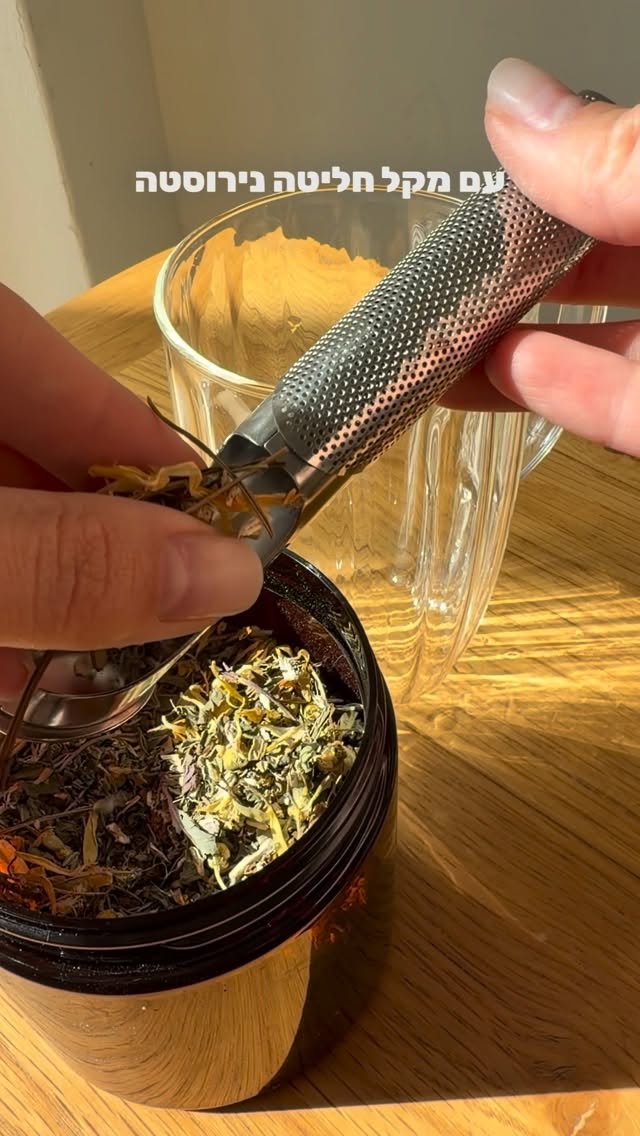
מקדם: מקל חליטה (מסננת תה מנירוסטה) (בסרטון ובכיתוב)
analytics ניתוח טענות מבוסס ראיות
"עלי תה גרוסים בעלי חיי מדף ארוכים מאבדים את סגולותיהם הרפואיות והתזונתיות."
מסקנת הבדיקה:
בעוד שחמצון ופירוק של תרכובות ביו-אקטיביות מתרחשים לאורך זמן, הטענה שתה גרוס מאבד את כל סגולותיו היא הכללה גורפת. איכות התה תלויה בתנאי האחסון (לחות, אור, טמפרטורה) ולא רק בדרגת הגריסה, אם כי שטח פנים גדול יותר בתה גרוס אכן מאיץ את תהליכי החמצון. (🟨)
chevron_right מקורות מדעיים: (2)
-
link
Plant bioactive compounds: extraction, biological activities, immunological, nutritional aspects, food application, and human health benefits-A comprehensive review.
In recent years, there has been a growing awareness of the importance of a nutritious diet for maintaining overall health. Among dietary components, plant-derived bioactive compounds have garnered significant attention due to their functional properties and potential to prevent various diseases. These bioactive constituents, although typically present in small quantities, provide substantial health benefits and are considered non-nutritive yet physiologically active components of the diet. Medicinal plants, vegetables, fruits, cereals, sauces, and spices have become focal points in nutritional research, owing to their diverse array of bioactive compounds. These compounds, including polyphenols, glucosinolates, carotenoids, terpenoids, alkaloids, saponins, vitamins, and dietary fibers, are increasingly recognized for their ability to reduce the risk of chronic diseases, as demonstrated by epidemiological studies. These molecules exhibit a broad spectrum of therapeutic activities, including antioxidant, anti-inflammatory, anti-atherogenic, antimicrobial, antithrombotic, cardioprotective, and vasodilatory activities. Despite their promising pharmacological and nutritional potential, the integration of plant-derived bioactive compounds into commercial products remains limited. Importantly, bioactive compounds that possess antioxidant and antimicrobial activities are increasingly acknowledged for their potential application as natural and environmentally sustainable food preservatives. The expanding interest in these applications underscores the critical need for efficient and standardized extraction methods. While conventional extraction techniques have been widely used, they often suffer from limitations such as low yield, degradation of heat-sensitive compounds, and high solvent consumption. To address these challenges, innovative and integrated extraction technologies have been developed, offering advantages such as enhanced extraction efficiency, reduced impurities, and lower environmental impact. These methods often employ reduced solvent use and energy input, aligning with sustainability goals. This review aims to provide a comprehensive overview of bioactive plant compounds by examining their extraction methods, biological and immunological activities, nutritional significance, food applications, and health benefits for humans.…
PMID: 41487672
-
link
Polyphenols from Byproducts: Their Applications and Health Effects.
Plant byproducts represent a valuable and underutilized source of bioactive compounds. Among these, phenolic compounds have attracted growing interest from the agricultural, cosmetic, and food industries due to their diverse biological activities. These naturally occurring compounds are derived from various plant species, and they exhibit strong antioxidant, antimicrobial, and antiviral properties. Their yield, as well as quality and bioavailability, has improved with more recent advancements within green extraction, as well as purification and characterization techniques. Several phenolic compounds exhibit strong antiviral and antioxidant activities, which are highlighting their value as bioactive compounds. It is essential to evaluate extraction methods for high-yield phenolic compounds from plant byproducts so that they can contribute to the circular bioeconomy, reduction in environmental waste, and development of biomedical and food industrial applications. Their physicochemical characteristics and potential applications may lead to a determination by contributing to promising fields through expanded in vitro, in vivo, and in silico experiments. This review summarizes current research on the extraction, recovery, and applications of phenolic compounds derived from plant byproducts, providing new insights into their sustainable utilization and bioactive potential.…
PMID: 41596145
"שימוש בעלי תה שלמים בחליטה מספק יתרונות בריאותיים וסגולות רפואיות גבוהים יותר מאשר תה גרוס."
מסקנת הבדיקה:
אין עדות מדעית ישירה המשווה באופן גורף בין 'עלי תה שלמים' ל'תה גרוס' מבחינת יתרונות בריאותיים עדיפים. המחקרים מתמקדים בהשפעת שיטות העיבוד (תה ירוק לעומת שחור) והמקור הגיאוגרפי על הפרופיל הכימי, ולא בדרגת הגריסה כגורם מכריע לסגולות רפואיות. (⬜)
chevron_right מקורות מדעיים: (3)
-
link
Biochemical Quality Profile of Black Tea from Upper Assam and North Bank Region of Assam, India.
Black tea quality is fundamentally determined by its biochemical composition, providing essential baseline data for producers, traders, and consumers. This study comprehensively evaluates key biochemical quality components of 32 black tea samples from Upper Assam and North Bank regions of Assam, India, produced by both orthodox and CTC methods, using standardized International Organization for Standardization (ISO) analytical protocols for total polyphenols (TP), theaflavins, catechins, water extract (WE), caffeine, thearubigins (TR), theanine, crude fibre (CF), and ash characteristics. The results reveal substantial variation in TP (83.54-184.52 mg g<sup>-1</sup>, avg. 134.07 mg g<sup>-1</sup>), theaflavins (4.88-15.54 mg g<sup>-1</sup>, avg. 8.61 mg g<sup>-1</sup>), caffeine (15.51-39.24 mg g<sup>-1</sup>, avg. 30.09 mg g<sup>-1</sup>), and theanine (2.47-8.16 mg g<sup>-1</sup>, avg. 5.53 mg g<sup>-1</sup>), demonstrating substantial biochemical variation reflecting differences in cultivation practices, leaf maturity, processing conditions and agroclimatic conditions. The orthodox and CTC methods yielded comparable WE (avg. 404.34 vs. avg. 407.91 mg g<sup>-1</sup>) and theanine levels (avg. 5.65 vs. avg. 5.35 mg g<sup>-1</sup>) indicating that both processing types successfully retain key quality components. All analyzed biochemical attributes with established minimum or maximum limits set by the ISO and Food Safety and Standards Authority of India (FSSAI) demonstrated compliance with national and international quality standards. These findings establish contemporary benchmarks for key quality indicators in Assam black teas and confirm the consistency of quality across diverse processing methodologies and cultivation practices.…
PMID: 41517222
-
link
European Teas (<i>Camellia sinensis</i>) as a New Frontier in the Specialty Tea Market: Characterizing the Antioxidant, Polyphenolic, and Sensory Profiles Through a Systematic, Comparative Approach.
Tea production in Europe represents an emerging segment of the specialty tea market, but a structured comparative analysis remains unexplored. This study employs a standardized approach to systematically characterize hot brews from black and green teas across five European gardens. Antioxidant capacity, total polyphenolic content (TPC), total flavonoid content (TFC), and metabolomic profiling by ultra-high performance liquid chromatography-mass spectrometry were evaluated, and for the first time, sensory profiling of these teas was conducted. Green teas consistently exhibited higher TPC, TFC, and antioxidant capacity compared to black teas, confirming the influence of processing methods. Metabolomic analysis revealed variability in caffeine linked to geographical origin and propagation method (cuttings vs. seeds). Importantly, sensory evaluation suggested a negative correlation between high TPC and overall consumer appreciation. The two most highly appreciated teas often showed lower TPC. These reliable findings advance knowledge in European tea research, providing valuable data for growers to enhance cultivar selection and marketing strategies in alignment with consumer preferences.…
PMID: 41596199
-
link
Seasonal and processing differences in nonvolatile compounds and volatile aroma of teas from Zhaoyuan, China: insight into "spring green, summer black, autumn dark" quality pattern.
Targeting northern marginal tea regions (37°N, Zhaoyuan, China), this study uniquely integrates seasonal processing (spring green, summer black, autumn dark tea) with chemical-sensory analyses on a single <i>Camellia sinensis</i> garden, filling the gap in volatile aroma compound (VAC) profiles of seasonally processed northern teas. Sensory traits diverged by type: SGT had the highest water extract, free amino acids and theanine; SBT the highest polyphenols; ADT the lowest polyphenols (microbial degradation). GC × GC-Q-TOFMS identified 357 VACs (key ROAV>1 compounds varied). Climate regulated precursors, processing drove metabolism, with strong nonvolatile-volatile correlations. Findings validate the seasonal quality pattern and optimize local tea utilization.…
PMID: 41853611
"חלקיקי פלסטיק המשתחררים משקיקי תה במים רותחים עלולים לגרום לשיבושים הורמונליים ולפגיעה באיברים פנימיים."
מסקנת הבדיקה:
מחקרים עדכניים מאשרים כי שקיקי תה מפלסטיק (כגון PET ו-PLA) משחררים מיליארדי חלקיקי מיקרו וננו-פלסטיק למים רותחים. חלקיקים אלו מזוהים כמשבשים אנדוקריניים (הורמונליים) בעלי פוטנציאל להשפעה שלילית על מערכות ביולוגיות ואיברים פנימיים. (🟩)
chevron_right מקורות מדעיים: (3)
-
link
Impact of polyethylene terephthalate and polylactic acid nanoplastics on cellular uptake and lipid metabolism in differentiated 3T3-L1 adipocytes.
Hazards of nanoplastics (NPls) have recently garnered concern because of their tiny size and widespread existence in the environment and daily life. Evidence indicates that the frequently used model particle polystyrene NPls can accumulate in adipose tissues of mice and disrupt lipid metabolism, which is a potential obesogen. However, NPl uptake mechanisms and their potential interference with energy homeostasis of adipocytes by other NPl types are still unknown. In this study, polyethylene terephthalate (PET) and polylactic acid (PLA)-NPls which were shown to abundantly be released from plastic tea bags at brewing temperatures-were selected to study the abovementioned issues in 3T3-L1 adipocytes. We found that similar sized self-synthesized PET NPls and commercial PLA NPls could be taken up by cells, and the former's uptake was via clathrin-mediated endocytosis and micropinocytosis, and they were then localized in lysosomes. PET NPls treatment decreased triglycerides (TGs) and increased the non-esterified fatty acid (NEFA) level. Significant activation of AMP-activated protein kinase (AMPK) and hormone-sensitive lipase (HSL) was observed. However, none of the effects was found with PLA. No representative proinflammatory factors were induced by NPl treatment. This study first proved that NPl-induced lipolysis of adipocytes is dependent on the plastic type, which serves as a basis for future concerns about NPl effects on cardiovascular disease and non-alcoholic fatty liver disease driven by adipocyte dysfunction.…
PMID: 40627910
-
link
Micro- and Nanoplastics as Disruptors of the Endocrine System-A Review of the Threats and Consequences Associated with Plastic Exposure.
Plastic overconsumption has emerged as a major environmental pollutant, with degraded micro- and nanoplastic (MNP) particles being consumed by a vast variety of species. MNPs, particles < 5 mm, contain endocrine-disrupting chemicals (EDCs), which can bind to hormone receptors and disrupt the proper endocrinological function of a variety of organs. This review explores the toxicological impact of MNPs on the hypothalamus, pituitary gland, thyroid, pineal body, ovaries, and testes, as well as the effects of the endocrinological regulatory axes, including the hypothalamic-pituitary-gonadal (HPG), hypothalamic-pituitary-thyroid (HPT), and hypothalamic-pituitary-adrenal (HPA) axes. The disruption of these hormonal feedback systems leads to reproductive dysfunction, neurotoxicity, cytotoxicity, immunotoxicity, and metabolic disorders. The gonads are particularly susceptible, with studies demonstrating oxidative stress, cellular apoptosis, and infertility due to MNP exposure. Given the widespread presence of MNPs and their impact on human health, further research is critical to understand their long-term effects and develop strategies to reduce exposure.…
PMID: 40649932
-
link
Microplastic exposure and human health risks across the life cycle: a focus on reproduction, development, and aging.
Microplastic pollution has emerged as a critical global environmental and public health challenge. These small plastic particles of diverse origins are ubiquitously distributed in aquatic, atmospheric, terrestrial, and food systems, entering the human body through ingestion, inhalation, and dermal contact, thereby creating complex lifelong exposure scenarios. Accumulating evidence indicates that microplastics (MPs) not only pose threats to key early-life stages-including reproductive health, pregnancy maintenance, fetal development, and child growth-but may also systematically accelerate the aging process and increase the risk of age-related diseases. This review provides a comprehensive synthesis of the physicochemical properties, environmental distribution, human exposure pathways, and life-cycle health impacts of MPs. It elaborates on their specific adverse effects on the reproductive system and their interference with fetal and child development. Furthermore, it delves into the core molecular mechanisms by which MPs drive cellular and tissue aging, primarily through the induction of mitochondrial dysfunction, oxidative stress, and chronic inflammation. The review also summarizes current research limitations concerning methodological standardization and epidemiological evidence, while outlining priority areas for future investigation. By integrating evidence across the life course, this review aims to establish a solid theoretical foundation for understanding the composite health risks of MPs, identifying vulnerable life stages, and informing the development of scientific prevention and intervention strategies.…
PMID: 41909126

שירה אבני | N.D נטורופתית | הרבליסטית
דירוג זה מבוסס על 1 דוחות אימות קודמים.
תמלול
descriptionאני כמעט והפסקתי לשתות תאנות יום. אתם יודעים שמוסיפים סבי פלסטיק לשקיק של התה כדי שהוא לא יתפרק במים? אני בחום הגבוה עם המים הרותחים, חלקיקי פלסטיק משתחררים, לא רואים אותם, אבל הם אשכרה עלולים לשבש הורמונלית ולפגוע לנו באיברים. גם עזבו שכמעט ואין תועלת בריאותית בעלי תה גרוס עם תוקף ארוך שיתנדף ממנו כל התכונות הרפואיות. מה שאני אוהבת לעשות זה להשתמש בעלי חליטה שלמים כאלה עם סגולות ואיכויות עם עקר חליטה נרוסטה איכותי נצרי שלא מוציא לי חלקיקי פלסטיק ודווקא בגלל שיש רעלים בכל מקום איפה שיש לי בחירה אני אעשה את המקסימום לבריאות שלי וזהו יש לי תה בריאים, טעם, צבע וערומה אמיתיים