סריקה בתהליך...
הניתוח עשוי לארוך 30–90 שניות
הידעת?
הסרטון אינו מכיל תוכן רפואי
חושבים שחלה טעות?
אם לדעתכם הסרטון אכן עוסק בטענות רפואיות או בריאותיות, הוסיפו הסבר קצר ושלחו בקשה לבדיקה מחדש.
הבקשה התקבלה! נבדוק את הסרטון ונחזור אליכם.
אירעה שגיאה בשליחת הבקשה. נסו שוב.
דו״ח מאומת
הסרטון מכיל שילוב של עובדות מוכחות וטענות המטעות את הציבור.
סיכום
הטענות המוצגות משקפות עקרונות כלליים בתחום ה-Chrononutrition (תזמון תזונתי), המקבלים תמיכה מדעית הולכת וגוברת. עם זאת, קיימת הבחנה בין עקרונות מטבוליים מוכחים (כמו חשיבות התזמון לאיזון גלוקוז) לבין המלצות ספציפיות על שעות אכילה, אשר לרוב חסרות ביסוס מחקרי קשיח ונוטות להיות תלויות הקשר אישי ותרבותי. הספרות המדעית מדגישה את חשיבות ההתאמה האישית של דפוסי האכילה ולאו דווקא היצמדות לשעות קבועות ונוקשות.
analytics ניתוח טענות מבוסס ראיות
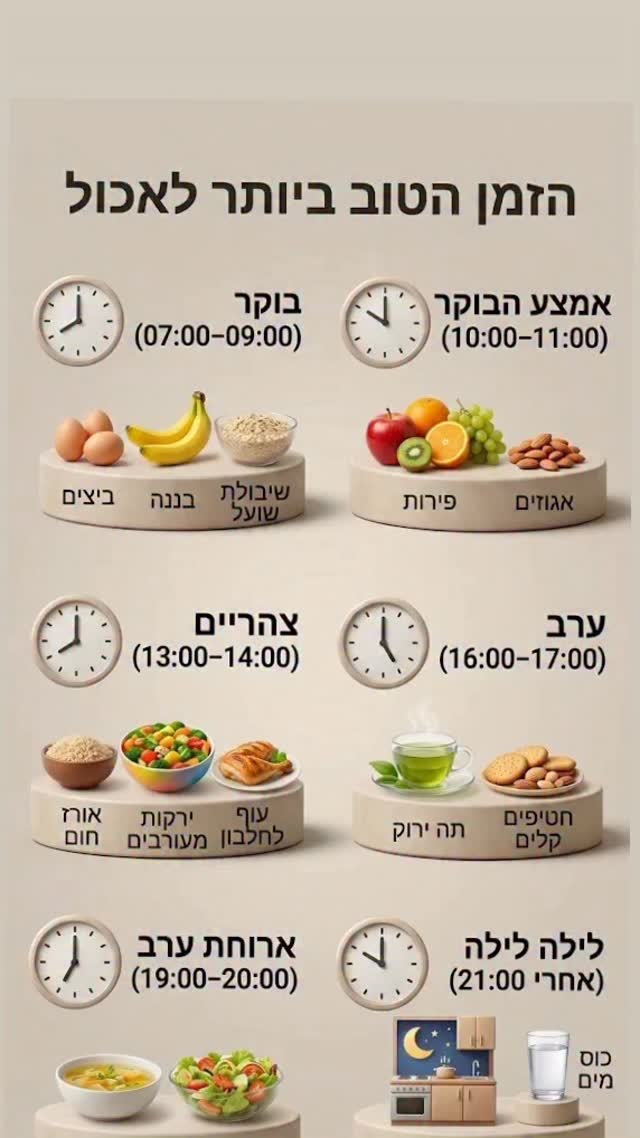
"מומלץ לאכול ארוחת בוקר בין השעות 07:00-09:00 המבוססת על חלבון ופחמימה מורכבת."
מסקנת הבדיקה:
בעוד שקיימות המלצות על ארוחת בוקר עשירה בחלבון ופחמימות מורכבות לשיפור השליטה הגליקמית, אין קונצנזוס מדעי גורף על חלון זמנים ספציפי (07:00-09:00) כהמלצה אוניברסלית. ההמלצות נוטות להיות מותאמות אישית בהתאם לאורח החיים והשעון הביולוגי של הפרט. (🟨)
chevron_right מקורות מדעיים: (3)
-
link
Chrononutrition in Gestational Diabetes: Toward Precision Timing in Maternal Care.
Gestational diabetes mellitus (GDM) is a heterogeneous disorder that compromises maternal and offspring health. Conventional medical nutrition therapy focuses on nutrient composition and caloric targets but largely omits timing and individualized biology. This narrative review synthesizes mechanistic, epidemiologic and interventional evidence linking circadian biology and meal timing (chrononutrition) to maternal glycemic control. Observational cohorts associate late eating and breakfast skipping with worse glycemia, while pilot interventions and CGM-based studies indicate that front-loading carbohydrates, restricting evening carbohydrate, extending overnight fasting (≈10-12 h), and simple within-meal sequencing can reduce postprandial excursions and increase time-in-range. We propose a pragmatic, tiered clinical pathway in which routine second-trimester triage (50 g glucose challenge test and ultrasound abdominal subcutaneous fat thickness) identifies higher-risk women for short-term CGM phenotyping and prioritized chrononutrition counseling. Integrating phenotype-matched timing interventions with dietetic support and digital decision tools allows rapid, individualized adjustments informed by real-time glucose patterns and patient chronotype. In principle, this tiered strategy could improve daily glycemic profiles, reduce the need for pharmacotherapy, and translate into better neonatal outcomes if supported by larger randomized trials. Chrononutrition therefore offers a promising extension of standard care: simple, low-cost adjustments to "when" food is eaten, supported by digital tools, could allow nutrition therapy for GDM to become more precise, more responsive, and ultimately more effective for both mother and child. Key priorities include validating bedside and chrono-omic stratifiers, testing scalable delivery platforms, and ensuring equitable access to personalized chrononutrition in pregnancy.…
PMID: 41295235
-
link
Glycaemic, appetite and circadian benefits of a dairy-enriched diet with high-protein breakfast and early daytime-restricted carbohydrate intake in type 2 diabetes: a randomised crossover trial.
<h4>Aims/hypothesis</h4>The circadian timing of food intake and the composition of dietary protein sources may jointly influence metabolic regulation. Our aim was to examine the effects of a dairy-enriched vs non-dairy isoenergetic diet with structured meal timing on circadian clock gene expression, glycaemic management and appetite regulation in individuals with type 2 diabetes.<h4>Methods</h4>In a randomised, crossover trial, 25 participants with type 2 diabetes and HbA<sub>1c</sub> ≥48 mmol/mol (6.5%), treated either with stable doses (≥3 months) of oral glucose-lowering agents or managed by diet, followed two 4 week dietary phases, one including dairy-based protein sources (YesMilk) and one excluding them (NoMilk), with a 3-4 week washout. Participants were randomly assigned to one of two intervention sequences using simple randomisation (coin flip), either starting with the YesMilk diet followed by the NoMilk diet, or vice versa. Due to the open-label design, allocation was not concealed from investigators or participants. The study was powered for the primary outcome of circadian clock gene expression in peripheral blood mononuclear cells. Secondary outcomes included glycaemic indices derived from continuous glucose monitoring (CGM) and appetite scores. The study was conducted via the Diabetes Unit at Wolfson Medical Center, Israel.<h4>Results</h4>Twenty-nine individuals were screened; 25 met eligibility criteria and were randomised to YesMilk or NoMilk dietary interventions in a crossover design. Thirteen participants began with the YesMilk dairy diet, all of whom completed both phases. Of the 12 who began with the NoMilk diet, six completed the study. Nineteen participants completed both intervention phases. Compared with the NoMilk phase, the YesMilk diet upregulated BMAL1 (+1.8-fold, p=0.0003), REV-ERBα (also known as NRD1D1) (+2.2-fold, p<0.001) and CRY1 (+1.4-fold, p=0.03), with higher PER1 expression (p=0.01 between diets at 4 weeks). Glycaemic variables improved under the YesMilk diet, with fasting glucose reduced by ~1.7 mmol/l, glucose management indicator reduced by 0.7%, and time in range increased by 9% compared with baseline (all p<0.05). Hunger and sweet craving scores decreased by 15-20% (p<0.05).<h4>Conclusions/interpretation</h4>A dairy-enriched diet aligned with structured meal timing enhanced circadian clock gene expression and improved glycaemic and appetite-related variables in individuals with type 2 diabetes. These findings support a mechanistic link between dietary protein source, circadian regulation and metabolic health, warranting confirmation in larger, long-term studies.<h4>Trial registration</h4>ClincalTrials.gov NCT03772067 FUNDING: The Israeli Ministry of Health provided funding.…
PMID: 41578008
-
link
Optimal Diet Strategies for Weight Loss and Weight Loss Maintenance.
Obesity has become one of the most important public health problems worldwide, which suggests the need for evidence-based dietary strategies for weight loss and its maintenance. Weight management depends upon complex factors such as amount of food eaten, type of food eaten, and timing of meals. In this review, we identified evidence-based dietary strategies for weight management based on these three components. An energy deficit is the most important factor in weight loss. A low-calorie diet with a low fat or carbohydrate content has been recommended; however, in some cases, a very-low-calorie diet is required for a short period. Some macronutrient composition-based diets, such as the ketogenic diet or high-protein diet, could be considered in some cases, although the potential risks and long-term effectiveness remain unknown. Meal timing is also an important factor in weight management, and higher-calorie breakfasts in combination with overnight fasting may help to prevent obesity. Our review indicated that there is no single best strategy for weight management. Hence, strategies for weight loss and its maintenance should be individualized, and healthcare providers must choose the best strategy based on patient preferences.…
PMID: 33107442
"מומלץ לאכול ארוחת ערב קלה בין השעות 19:00-20:00 כדי לא להעמיס על הגוף לפני השינה."
מסקנת הבדיקה:
ההמלצה לארוחת ערב קלה ומוקדמת נתמכת על ידי מחקרים המצביעים על כך שאכילה מאוחרת עשויה להשפיע לרעה על המטבוליזם. עם זאת, הטענה שפחמימות בערב מזיקות אינה חד-משמעית, ומחקרים מסוימים אף מצביעים על כך שצריכת פחמימות מתונה בערב עשויה לסייע בשיפור איכות השינה. (🟨)
chevron_right מקורות מדעיים: (3)
-
link
Meal Timing and Sleeping Energy Metabolism.
There is a physiological link between sleep and eating. Insufficient sleep is a risk factor for overeating and excess body weight gain, and molecules such as orexin and insulin play a role in the control of sleep and energy intake. The effects of dietary timing on sleep and energy metabolism were examined in this review. First, we examined sleep energy metabolism and sleep quality under time-restricted eating, including skipping breakfast or dinner. Second, the mechanisms, benefits, and translational potential of the effects of time-restricted diets on sleep were discussed. Time-restricted eating under controlled conditions, in which daily caloric intake was kept constant, affected the time course of energy metabolism but did not affect total energy expenditure over 24 h. In free-living conditions, time-restricted eating for extended durations (4-16 weeks) decreased energy intake and body weight, and the effects of early time-restricted eating were greater than that of midday time-restricted eating. Although assessment of sleep by polysomnographic recording remains to be performed, no negative effects on the subjective quality of sleep have been observed.…
PMID: 36771468
-
link
Chrononutrition and Cardiometabolic Health: An Overview of Epidemiological Evidence and Key Future Research Directions.
Chrononutrition is a rapidly evolving field of nutritional epidemiology that addresses the complex relationship between temporal eating patterns, circadian rhythms, and metabolic health, but most prior research has focused on the cardiometabolic consequences of time-restricted feeding and intermittent fasting. The purpose of this topical review is to summarize epidemiological evidence from observational and intervention studies regarding the role of chrononutrition metrics related to eating timing and regularity in cardiometabolic health preservation and cardiovascular disease prevention. Observational studies are limited due to the lack of time-stamped diet data in most population-based studies. Findings from cohort studies generally indicate that breakfast skipping or the later timing of the first eating occasion, a later lunch and dinner, and a greater proportion of caloric intake consumed in the evening are associated with adverse cardiometabolic outcomes, including higher risk for coronary heart disease, hypertension, type 2 diabetes, obesity, dyslipidemia, and systemic inflammation. Randomized controlled trials are also limited, as most in the field of chrononutrition focus on the cardiometabolic consequences of time-restricted feeding. Overall, interventions that shift eating timing patterns to earlier in the day and that restrict evening caloric intake tend to have protective effects on cardiometabolic health, but small sample sizes and short follow-up are notable limitations. Innovation in dietary assessment approaches, to develop low-cost validated tools with acceptable participant burden that reliably capture chrononutrition metrics, is needed for advancing observational evidence. Culturally responsive pragmatic intervention studies with sufficiently large and representative samples are needed to understand the impact of fixed and earlier eating timing schedules on cardiometabolic health. Additional research is warranted to understand the modifiable determinants of temporal eating patterns, to investigate the role of chrononutrition in the context of other dimensions of diet (quantity, quality, and food and nutrition security) in achieving cardiometabolic health equity, and to elucidate underlying physiological mechanisms.…
PMID: 39064774
-
link
The impact of the timing of pasta intake on sleep quality and health outcomes: a protocol for a randomized controlled trial.
Pasta is a fundamental component of the Mediterranean diet and a key source of carbohydrates. Despite its nutritional benefits, misconceptions persist regarding its potential to promote weight gain, particularly when consumed at dinner. While no evidence supports this concern, emerging chrononutritional research suggests that evening carbohydrate intake may positively influence sleep quality by promoting serotonin production. This study aims to assess, for the first time, whether pasta consumption (lunch vs. dinner) affects sleep quality, circadian rhythms, cardiometabolic health, and gut microbiota composition in healthy, normal-weight adults. A 7-month randomized, open-label, cross-over trial will enroll 70 participants, assigned to two isocaloric, Mediterranean-style diets differing only in pasta consumption timing. Each phase will last 3 months, separated by a 1-month wash-out period. At the beginning and end of each phase, participants will wear an actigraph for 7 days and provide saliva, blood, and stool samples. Additional assessments include body composition analysis, indirect calorimetry, and food and lifestyle diaries. The primary outcome will be changes in sleep quality from baseline. Secondary outcomes include anthropometric measurements, body composition, metabolic rate, biochemical and hormonal markers, inflammatory and oxidative stress markers, gut microbiota composition, and short-chain fatty acid production. The study has been approved by the Tuscany Regional Ethics Committee of the Azienda Ospedaliera Universitaria (AOU)-Careggi, Florence. This study will provide experimental data on how the timing of pasta consumption affects sleep quality and a range of health outcomes, contributing to the debate on the optimal timing of carbohydrate intake. ClinicalTrials.gov NCT06185634. Registered on 07/01/2024.…
PMID: 40340858
"מומלץ לאכול ארוחת צהריים בין השעות 13:00-14:00 כארוחה המרכזית ביום."
מסקנת הבדיקה:
לא נמצאו ראיות מדעיות המגדירות את השעות 13:00-14:00 כחלון זמן מחייב לארוחה המרכזית. בעוד שפיזור קלורי מוקדם יותר ביום עשוי להיות מועיל מטבולית, הגדרת ארוחת צהריים בשעה ספציפית כארוחה המרכזית היא העדפה תרבותית ולא הנחיה קלינית מבוססת ראיות. (⬜)
"תזמון הארוחות במהלך היום מסייע בשמירה על רמות סוכר מאוזנות ועיכול תקין."
מסקנת הבדיקה:
הספרות המדעית בתחום ה-Chrononutrition תומכת בכך שתזמון ארוחות משפיע על המטבוליזם, רגישות לאינסולין ואיזון גלוקוז. מחקרים מצביעים על כך שסנכרון צריכת המזון עם השעון הביולוגי מסייע בשיפור הבריאות המטבולית ובתהליכי עיכול תקינים. (🟩)
chevron_right מקורות מדעיים: (3)
-
link
Meal timing effects on insulin sensitivity and intrahepatic triglycerides during weight loss.
Several human and rodent studies suggest that in addition to the amount of energy consumed, timing of food intake contributes to body weight regulation. Consuming most energy in the morning has favorable effects on weight loss and weight maintenance. Whether this also affects glucose metabolism and liver fat independently from weight loss is unknown. We hypothesized that during weight loss, consuming most energy in the morning improves insulin sensitivity and reduces hepatic fat content more than consuming most energy in the evening. Twenty-three obese insulin resistant men (age 59.9±7.9 years, body mass index 34.4±3.8 kg m Meal macronutrient composition and weight loss (6.5±1.5% vs 6.2±1.9%, respectively, P=0.70) did not differ between the BF and D groups. Endogenous glucose production (P⩽0.001), hepatic and peripheral insulin sensitivity (P=0.002; P=0.001, respectively) as well as IHTG content (P⩽0.001) all significantly improved with weight loss, but were not different between the BF and D groups. In addition, both groups decreased REE and respiratory quotient equally. During weight loss, consuming most energy in the morning instead of the evening does not have additional beneficial effects on insulin sensitivity and IHTG content. These results do not support weight independent effects of meal timing on glucose metabolism and IHTG in hypocaloric conditions in obese men.…
PMID: 28811653
-
link
Circadian Timekeeping Through Nutritional and Metabolic Sensory Networks.
Circadian rhythms are predictable biological patterns that recur about every 24 h and, in mammals such as humans, are entrained to daylight by the hypothalamic suprachiasmatic nucleus (SCN). Although light is a potent zeitgeber for the SCN, cells outside of the SCN can synchronize to daily nutrient and metabolic cues. In these tissues, nutrient metabolic processes are regulated by the molecular clock in anticipation of food availability or scarcity. Furthermore, nutrients and metabolic processes themselves may act upon members of the molecular clock to regulate their expression and activity. These interactions maintain synchrony between the SCN and food-entrainable clocks when activity and nutrient intake align. However, the light-entrainable SCN and food-entrainable clocks can become desynchronized, particularly in modern society where humans are commonly exposed to shift work and jet lag. Therefore, the mechanisms for sensing nutrients at specific times of day are critical components of circadian timekeeping and organismal homeostasis. In the following narrative review, we aim to synthesize current evidence on time-of-day-dependent nutrient sensing in mammalian systems, examine how nutrient-derived signals and metabolic processes interact with molecular clock mechanisms across cellular and tissue levels, and evaluate the integration of central and peripheral clocks in regulating gene expression, energy utilization, and organismal homeostasis, including the impacts of feeding cycles and circadian disruption. While previous reviews have discussed circadian nutrient metabolism, this review provides conceptual support for the role of nutrients as time-of-day signaling mechanisms.…
PMID: 41978183
-
link
Glycaemic, appetite and circadian benefits of a dairy-enriched diet with high-protein breakfast and early daytime-restricted carbohydrate intake in type 2 diabetes: a randomised crossover trial.
<h4>Aims/hypothesis</h4>The circadian timing of food intake and the composition of dietary protein sources may jointly influence metabolic regulation. Our aim was to examine the effects of a dairy-enriched vs non-dairy isoenergetic diet with structured meal timing on circadian clock gene expression, glycaemic management and appetite regulation in individuals with type 2 diabetes.<h4>Methods</h4>In a randomised, crossover trial, 25 participants with type 2 diabetes and HbA<sub>1c</sub> ≥48 mmol/mol (6.5%), treated either with stable doses (≥3 months) of oral glucose-lowering agents or managed by diet, followed two 4 week dietary phases, one including dairy-based protein sources (YesMilk) and one excluding them (NoMilk), with a 3-4 week washout. Participants were randomly assigned to one of two intervention sequences using simple randomisation (coin flip), either starting with the YesMilk diet followed by the NoMilk diet, or vice versa. Due to the open-label design, allocation was not concealed from investigators or participants. The study was powered for the primary outcome of circadian clock gene expression in peripheral blood mononuclear cells. Secondary outcomes included glycaemic indices derived from continuous glucose monitoring (CGM) and appetite scores. The study was conducted via the Diabetes Unit at Wolfson Medical Center, Israel.<h4>Results</h4>Twenty-nine individuals were screened; 25 met eligibility criteria and were randomised to YesMilk or NoMilk dietary interventions in a crossover design. Thirteen participants began with the YesMilk dairy diet, all of whom completed both phases. Of the 12 who began with the NoMilk diet, six completed the study. Nineteen participants completed both intervention phases. Compared with the NoMilk phase, the YesMilk diet upregulated BMAL1 (+1.8-fold, p=0.0003), REV-ERBα (also known as NRD1D1) (+2.2-fold, p<0.001) and CRY1 (+1.4-fold, p=0.03), with higher PER1 expression (p=0.01 between diets at 4 weeks). Glycaemic variables improved under the YesMilk diet, with fasting glucose reduced by ~1.7 mmol/l, glucose management indicator reduced by 0.7%, and time in range increased by 9% compared with baseline (all p<0.05). Hunger and sweet craving scores decreased by 15-20% (p<0.05).<h4>Conclusions/interpretation</h4>A dairy-enriched diet aligned with structured meal timing enhanced circadian clock gene expression and improved glycaemic and appetite-related variables in individuals with type 2 diabetes. These findings support a mechanistic link between dietary protein source, circadian regulation and metabolic health, warranting confirmation in larger, long-term studies.<h4>Trial registration</h4>ClincalTrials.gov NCT03772067 FUNDING: The Israeli Ministry of Health provided funding.…
PMID: 41578008

קוד_הבריאות
דירוג זה מבוסס על 2 דוחות אימות קודמים.
האם הדוח הזה היה מועיל לך?
מה היה פחות טוב? (רשות)
תודה על הפידבק!
עירעור על דוח זה
ספקו ראיות חדשות או הצביעו על אי דיוקים
נעדכן אותך על תוצאות הבדיקה
הוסיפו קישורים למחקרים או מקורות רפואיים מוכרים
העירעור נשלח בהצלחה!
המנוע המדעי שלנו יבדוק את הראיות שהגשתם. נעדכן אתכם באימייל עם התוצאות.
ניתוח מבוסס בינה מלאכותית
דוח זה נוצר באופן אוטומטי על ידי מערכת בינה מלאכותית ועשוי להכיל שגיאות, אי-דיוקים או מידע חלקי. הניתוח אינו מהווה ייעוץ רפואי, אבחנה או המלצה לטיפול, והוא אינו תחליף לדעתו של איש מקצוע רפואי מוסמך. יש להתייעץ עם רופא או מומחה מוסמך לפני קבלת כל החלטה רפואית. המידע מוצג לצרכי מידע כללי בלבד.
מידע זה מופק על ידי בינה מלאכותית ואינו מהווה תחליף לייעוץ רפואי מקצועי.