סריקה בתהליך...
הניתוח עשוי לארוך 30–90 שניות
הידעת?
הסרטון אינו מכיל תוכן רפואי
חושבים שחלה טעות?
אם לדעתכם הסרטון אכן עוסק בטענות רפואיות או בריאותיות, הוסיפו הסבר קצר ושלחו בקשה לבדיקה מחדש.
הבקשה התקבלה! נבדוק את הסרטון ונחזור אליכם.
אירעה שגיאה בשליחת הבקשה. נסו שוב.
דו״ח מאומת
הסרטון מכיל שילוב של עובדות מוכחות וטענות המטעות את הציבור.
סיכום
הספרות המדעית מאשרת כי שקיקי תה סינתטיים משחררים חלקיקי פלסטיק לתוך המשקה בעת חליטה במים רותחים. קיימות עדויות המצביעות על פוטנציאל לנזק ביולוגי כתוצאה מחשיפה למיקרו-פלסטיק, אם כי נדרשים מחקרים נוספים כדי לבסס את ההשלכות הבריאותיות המדויקות בבני אדם. הטענה לגבי היעדר תועלת בריאותית בתה תעשייתי בשל חיי מדף אינה מגובה בראיות מדעיות.
תוכן פרסומי
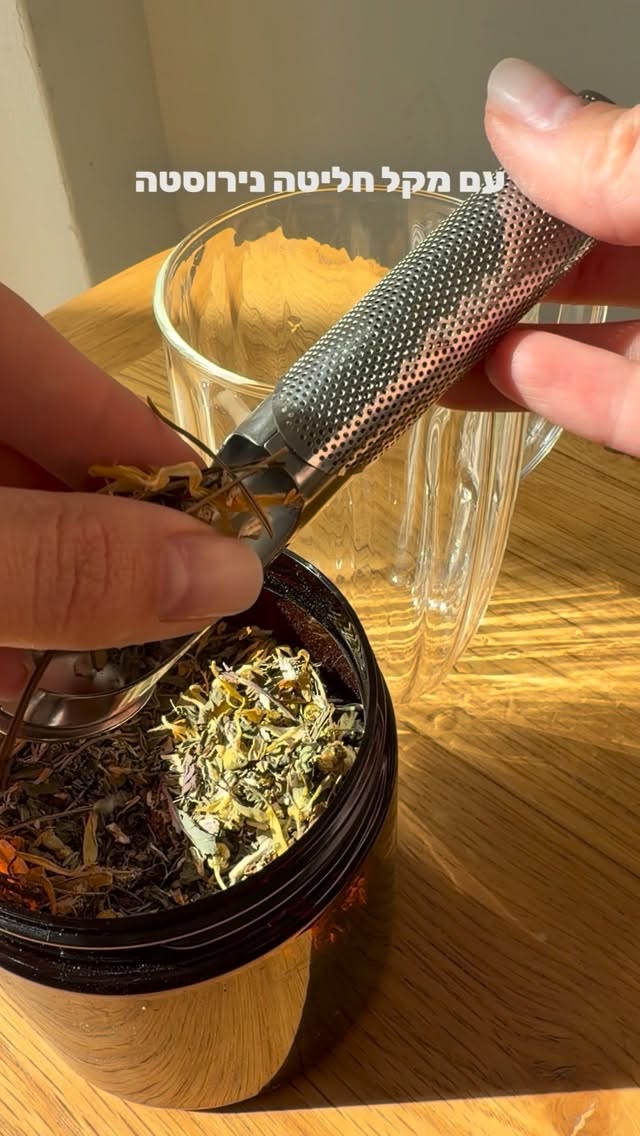
מקדם: מקל חליטה מנירוסטה (בסרטון ובכיתוב)
analytics ניתוח טענות מבוסס ראיות
"צריכת מיקרו-פלסטיק משקיקי תה עלולה לגרום לשיבוש הורמונלי, דלקתיות, עומס על הכבד ופגיעה במערכת העיכול והחיסון."
מסקנת הבדיקה:
קיימות עדויות מדעיות המקשרות חשיפה למיקרו-פלסטיק לתהליכים דלקתיים, עקה חמצונית ושיבושים ביולוגיים במודלים ניסיוניים. עם זאת, הקשר הישיר וההשפעה הקלינית ארוכת הטווח בבני אדם מצריכים מחקרים נוספים כדי לקבוע רמת סיכון ודאית. (🟨)
chevron_right מקורות מדעיים: (2)
-
link
Microplastics and neurotoxicity: could prenatal exposure to microplastics boost congenital enteric neuropathies?
Microplastics (MPs) pollution represents an increasing worldwide problem and a real global challenge for human health, which also affects unborn children. Specifically, during their degradation, they can release a broad range of toxic and hormonally active agents, such as plasticizers. Thus, microplastics alone are pernicious, but they often also carry other harmful chemicals and even problematic bacteria on their surface and within their structure (heavy metals, pesticides, parabens, etc.), which amplifies their toxic potential. Due to their induction of oxidative damage, inflammation, mitochondrial apoptosis, and microbiota dysbiosis, and more, microplastics act as neurotoxic agents. Periods particularly sensitive to this neurotoxicity include fetal development and childhood, during which microplastics can negatively affect proper neuronal development. When expecting mothers are exposed, microplastics can cross the placenta barrier, reach the developing embryo, and accumulate in its organs. During fetal development, even minor interferences in neuronal migration can result in deficient neuronal innervation in the gut, potentially leading to congenital enteric neuropathy. Although an accurate estimation of human exposure is still pending, this may produce serious intestinal motility disorders and compromise the long-term quality of life of newborns. In this review, we analyze how microplastic neurotoxicity could be an aggravating factor in the development of congenital enteric aganglionosis and, consequently, postnatal motility disorders. Finally, we propose reducing pregnant women's exposure to microplastics as an important preventive measure to protect the fetus from neurotoxicity.…
PMID: 41948411
-
link
From Kitchen to Cell: A Critical Review of Microplastic Release from Consumer Products and Its Health Implications.
Microplastics (MPs) are pervasive environmental pollutants, widely distributed from aquatic ecosystems to the terrestrial food chain, and represent a potential route of human exposure. Although several reviews have addressed MP contamination, a critical synthesis focusing on pathways through which consumer goods directly enter food and beverages, along with corresponding industry and regulatory responses, is lacking. This review fills this gap by proposing the direct release of MPs from common sources such as food packaging, kitchen utensils, and household appliances, linking the release mechanisms to human health risks. The release mechanisms of MPs under thermal stress, mechanical abrasion, chemical leaching, and environmental factors, as well as a risk-driven framework for MP release, are summarized. Human exposure through ingestion is the predominant route, while inhalation and dermal contact are additional pathways. In vitro and animal studies have associated MP exposure to inflammatory responses and oxidative stress, neurotoxicity, and genomic instability as endpoints, though direct causal evidence in humans remains lacking, and extrapolation from model systems necessitates caution. This review revealed that dietary intake from kitchen sources is the primary pathway for MP exposure, higher than the inhalation pathway. Most importantly, this review critically sheds light on the initiatives that should be taken by industries with respect to global strategies and new policies to alleviate these challenges. However, while there has been an upsurge in research commenced in this area, there are still research gaps that need to be addressed to explore food matrices such as dairy products, meat, and wine in the context of the supply chain. In conclusion, we pointed out the challenges that limit this research with the aim of improving standardization; research approaches and a risk assessment framework to protect health; and the key differences between MP and nanoplastic (NP) detection, toxicity, and regulatory strategies, underscoring the need for size-resolved risk assessments.…
PMID: 41600643
"שקיקי תה תעשייתיים כמעט ואינם בעלי תועלת בריאותית בשל חיי המדף הארוכים שלהם."
מסקנת הבדיקה:
לא נמצאה עדות מדעית התומכת בטענה שחיי מדף ארוכים של תה תעשייתי מבטלים את התועלת הבריאותית שלו. בעוד שאיכות נוגדי החמצון עשויה להשתנות עם הזמן, תה נותר מקור לתרכובות ביו-אקטיביות גם במוצרים מסחריים. (⬜)
"שקיקי תה מכילים סיבי פלסטיק כדי למנוע מהם להתפרק במים רותחים."
מסקנת הבדיקה:
מחקרים מאשרים כי שקיקי תה רבים, במיוחד אלו העשויים מחומרים סינתטיים כמו ניילון או פוליפרופילן, מכילים סיבי פלסטיק המיועדים לשמור על שלמות השקיק בטמפרטורות גבוהות. (🟩)
chevron_right מקורות מדעיים: (2)
-
link
Evolution of Microplastics Released from Tea Bags into Water.
Eight different types of tea bags were investigated in this work using dynamic light scattering, electrophoretic mobility and nanoparticle tracking analysis methods to determine the concentration and size of released particles from the bag materials at different temperatures and times. Infrared spectroscopy and calorimetric methods confirmed that the bag material consisted of synthetic (nylon or polypropylene) or natural polymers (cellulose). The size of the released particles lies in the range of 200 nm<sup>-1</sup> µm with an initial bimodal distribution and with an average diameter of about 600 nm. The concentration of released particles increases with increasing temperature and brewing time. The released particles of synthetic polymers remain quite stable and are not affected by natural enzymes, while cellulose particles are easily degraded by the proteolytic complex Morikrase. When analyzing the electrophoretic mobility, it was found that the released particles have a negative surface charge, which probably determines the absence of cytotoxicity established on the epithelial cell line Caco-2 even at the maximum values of the observed particle concentrations (14 × 10<sup>9</sup> particle/L for synthetic polymers and 170 × 10<sup>9</sup> particle/L for cellulose).…
PMID: 41096345
-
link
From Kitchen to Cell: A Critical Review of Microplastic Release from Consumer Products and Its Health Implications.
Microplastics (MPs) are pervasive environmental pollutants, widely distributed from aquatic ecosystems to the terrestrial food chain, and represent a potential route of human exposure. Although several reviews have addressed MP contamination, a critical synthesis focusing on pathways through which consumer goods directly enter food and beverages, along with corresponding industry and regulatory responses, is lacking. This review fills this gap by proposing the direct release of MPs from common sources such as food packaging, kitchen utensils, and household appliances, linking the release mechanisms to human health risks. The release mechanisms of MPs under thermal stress, mechanical abrasion, chemical leaching, and environmental factors, as well as a risk-driven framework for MP release, are summarized. Human exposure through ingestion is the predominant route, while inhalation and dermal contact are additional pathways. In vitro and animal studies have associated MP exposure to inflammatory responses and oxidative stress, neurotoxicity, and genomic instability as endpoints, though direct causal evidence in humans remains lacking, and extrapolation from model systems necessitates caution. This review revealed that dietary intake from kitchen sources is the primary pathway for MP exposure, higher than the inhalation pathway. Most importantly, this review critically sheds light on the initiatives that should be taken by industries with respect to global strategies and new policies to alleviate these challenges. However, while there has been an upsurge in research commenced in this area, there are still research gaps that need to be addressed to explore food matrices such as dairy products, meat, and wine in the context of the supply chain. In conclusion, we pointed out the challenges that limit this research with the aim of improving standardization; research approaches and a risk assessment framework to protect health; and the key differences between MP and nanoplastic (NP) detection, toxicity, and regulatory strategies, underscoring the need for size-resolved risk assessments.…
PMID: 41600643
"חשיפה למים רותחים גורמת לשחרור חלקיקי פלסטיק משקיקי התה לתוך המשקה."
מסקנת הבדיקה:
ספרות מדעית עדכנית מצביעה על כך שחליטת שקיקי תה במים רותחים מובילה לשחרור משמעותי של מיקרו-פלסטיק וננו-פלסטיק לתוך המשקה כתוצאה מחשיפה תרמית. (🟩)
chevron_right מקורות מדעיים: (3)
-
link
Microplastics and nanoplastics in tea: Sources, characteristics and potential impacts.
Recent scientific studies have raised concerns about the presence and potential impacts of microplastics and nanoplastics (MNPs) in tea-based drinks. This review critically examines publications relating to MNPs in tea, with focus on the type of sample involved, methods and techniques employed to isolate and identify MNPs, and the main qualitative and quantitative findings. Sources of MNPs in tea include production water, plastic packaging and contaminated tea leaves but the most important source is teabags when steeped in boiling water. Here, more than 10…
PMID: 39608112
-
link
Evolution of Microplastics Released from Tea Bags into Water.
Eight different types of tea bags were investigated in this work using dynamic light scattering, electrophoretic mobility and nanoparticle tracking analysis methods to determine the concentration and size of released particles from the bag materials at different temperatures and times. Infrared spectroscopy and calorimetric methods confirmed that the bag material consisted of synthetic (nylon or polypropylene) or natural polymers (cellulose). The size of the released particles lies in the range of 200 nm<sup>-1</sup> µm with an initial bimodal distribution and with an average diameter of about 600 nm. The concentration of released particles increases with increasing temperature and brewing time. The released particles of synthetic polymers remain quite stable and are not affected by natural enzymes, while cellulose particles are easily degraded by the proteolytic complex Morikrase. When analyzing the electrophoretic mobility, it was found that the released particles have a negative surface charge, which probably determines the absence of cytotoxicity established on the epithelial cell line Caco-2 even at the maximum values of the observed particle concentrations (14 × 10<sup>9</sup> particle/L for synthetic polymers and 170 × 10<sup>9</sup> particle/L for cellulose).…
PMID: 41096345
-
link
From Kitchen to Cell: A Critical Review of Microplastic Release from Consumer Products and Its Health Implications.
Microplastics (MPs) are pervasive environmental pollutants, widely distributed from aquatic ecosystems to the terrestrial food chain, and represent a potential route of human exposure. Although several reviews have addressed MP contamination, a critical synthesis focusing on pathways through which consumer goods directly enter food and beverages, along with corresponding industry and regulatory responses, is lacking. This review fills this gap by proposing the direct release of MPs from common sources such as food packaging, kitchen utensils, and household appliances, linking the release mechanisms to human health risks. The release mechanisms of MPs under thermal stress, mechanical abrasion, chemical leaching, and environmental factors, as well as a risk-driven framework for MP release, are summarized. Human exposure through ingestion is the predominant route, while inhalation and dermal contact are additional pathways. In vitro and animal studies have associated MP exposure to inflammatory responses and oxidative stress, neurotoxicity, and genomic instability as endpoints, though direct causal evidence in humans remains lacking, and extrapolation from model systems necessitates caution. This review revealed that dietary intake from kitchen sources is the primary pathway for MP exposure, higher than the inhalation pathway. Most importantly, this review critically sheds light on the initiatives that should be taken by industries with respect to global strategies and new policies to alleviate these challenges. However, while there has been an upsurge in research commenced in this area, there are still research gaps that need to be addressed to explore food matrices such as dairy products, meat, and wine in the context of the supply chain. In conclusion, we pointed out the challenges that limit this research with the aim of improving standardization; research approaches and a risk assessment framework to protect health; and the key differences between MP and nanoplastic (NP) detection, toxicity, and regulatory strategies, underscoring the need for size-resolved risk assessments.…
PMID: 41600643

שירה אבני | N.D נטורופתית | הרבליסטית
דירוג זה מבוסס על 1 דוחות אימות קודמים.
האם הדוח הזה היה מועיל לך?
מה היה פחות טוב? (רשות)
תודה על הפידבק!
עירעור על דוח זה
ספקו ראיות חדשות או הצביעו על אי דיוקים
נעדכן אותך על תוצאות הבדיקה
הוסיפו קישורים למחקרים או מקורות רפואיים מוכרים
העירעור נשלח בהצלחה!
המנוע המדעי שלנו יבדוק את הראיות שהגשתם. נעדכן אתכם באימייל עם התוצאות.
ניתוח מבוסס בינה מלאכותית
דוח זה נוצר באופן אוטומטי על ידי מערכת בינה מלאכותית ועשוי להכיל שגיאות, אי-דיוקים או מידע חלקי. הניתוח אינו מהווה ייעוץ רפואי, אבחנה או המלצה לטיפול, והוא אינו תחליף לדעתו של איש מקצוע רפואי מוסמך. יש להתייעץ עם רופא או מומחה מוסמך לפני קבלת כל החלטה רפואית. המידע מוצג לצרכי מידע כללי בלבד.
מידע זה מופק על ידי בינה מלאכותית ואינו מהווה תחליף לייעוץ רפואי מקצועי.